






FROM PASSION AND BELIEF
Before the days of Lotus, I enjoyed a long and successful career in visual effects, designing and supervising computer graphics for film and television. It was a fantastic career but as I grew out of it, whatever replaced it had to be at least as enjoyable and rewarding. As a stopgap in those interim years I invested in property so when I set up Lotus in 2010, it was primarily for for fun and enjoyment, for doing something in exactly the way I wanted, with passion, sincerity and real belief. This is the way I have always run Lotus. I have always maintained that if you are passionate about something in life and have an audience, then they will be interested and inspired too, and will come to have that same passion as you.
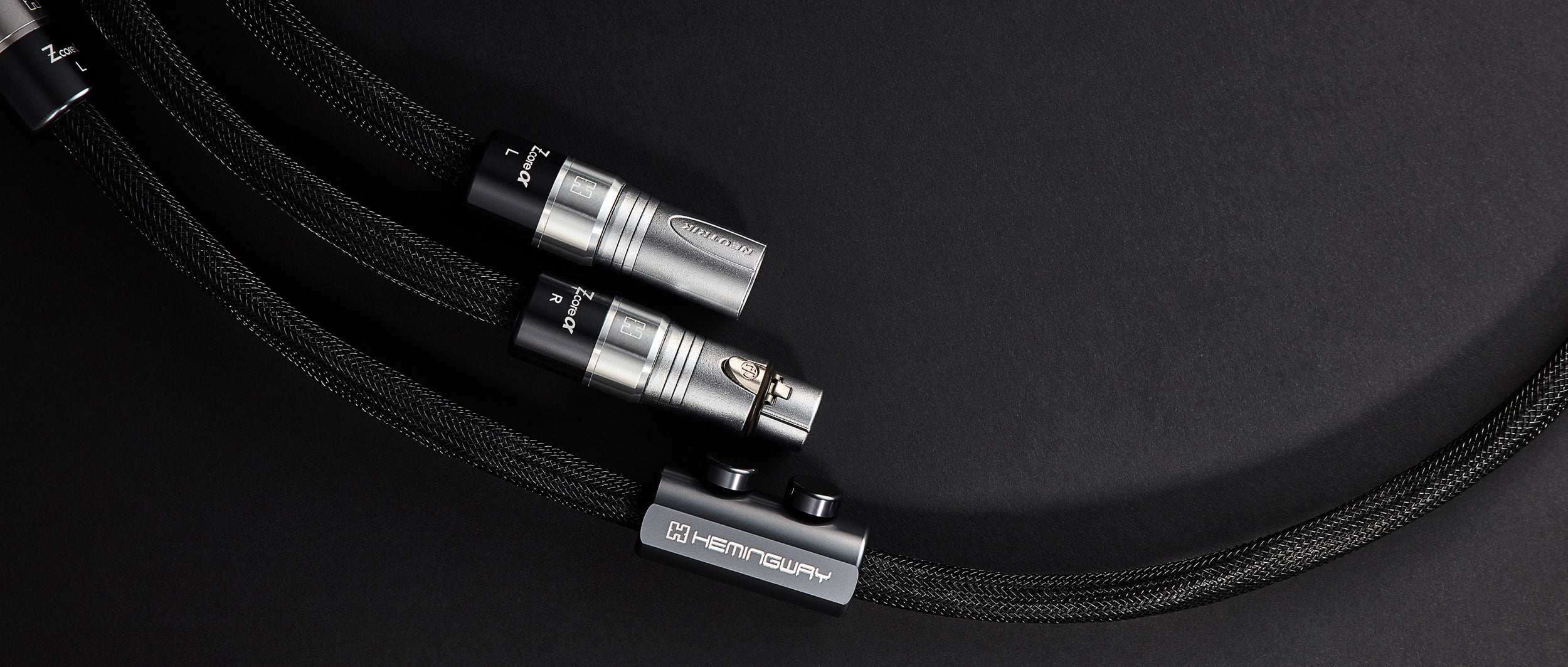
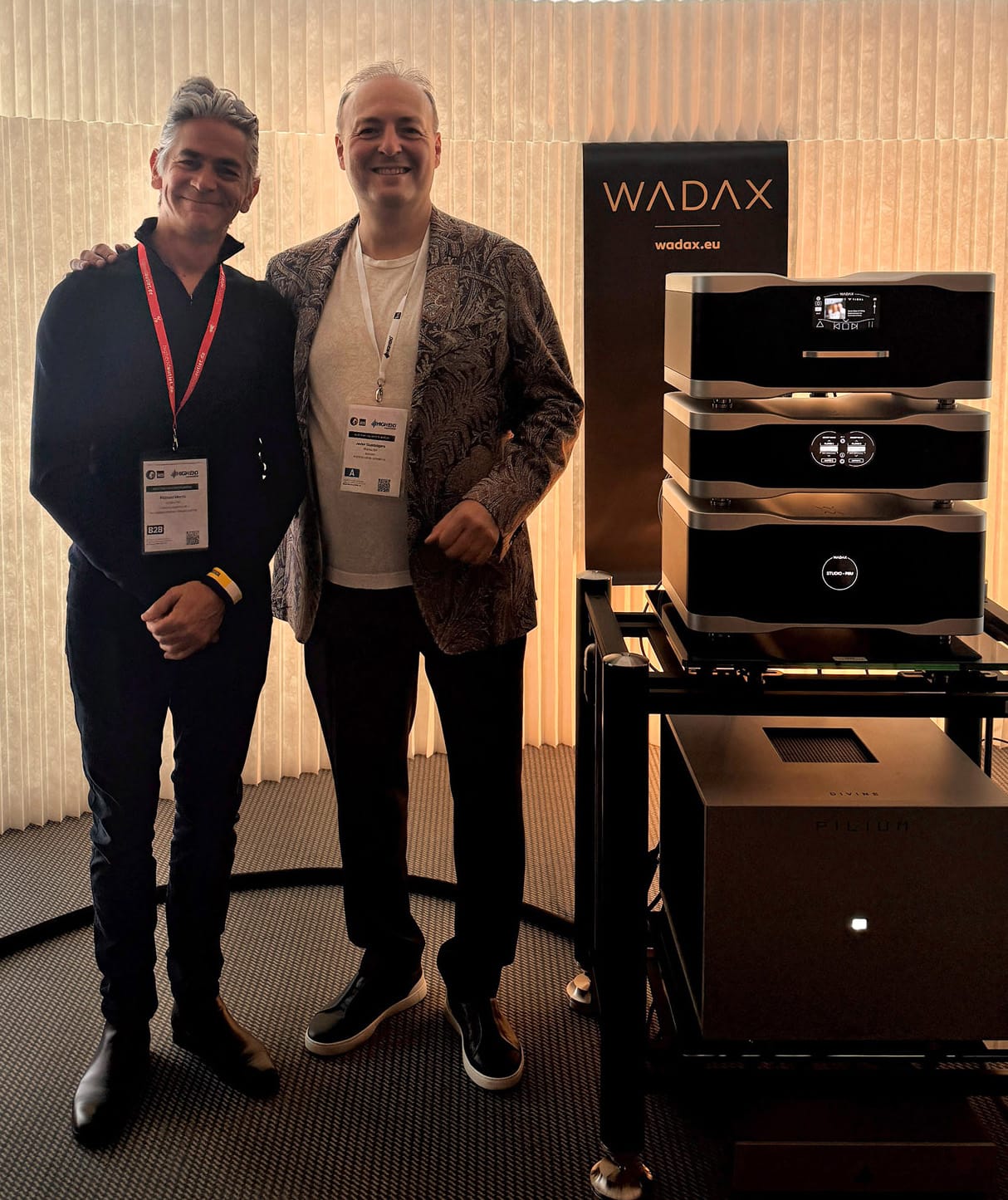
All of this means that I own the entire company and call every single shot. I sell what I love and have huge belief in and this strong belief is underpinned by understanding my products on a profound level. This in turn means that I do not chase the latest fashion or market money spinner and I don’t take on products with uncertainty, only to drop them half a year later when they haven’t sold very well. In addition, I do not stock a brand simply because one of my distributors tells me its good or forces it onto me; in fact the opposite has often been true where whole brands have come to the UK and distribution networks have been constructed as a result of my initial interest. Brands like Tidal, Thrax, Joseph Audio, Hemingway, Rockport, Tara Labs, Dohmann came to these shores because I preferred them to popular rival offerings that were already available in the UK and I went out and got them off my own back. This route is a much bigger financial commitment, much higher risk and a more arduous uphill climb than to simply sign up to existing well known lines already distributed and marketed in the UK; but then it’s a necessary one, because the biggest, most established high end brands with the most powerful marketing behind them often disappoint in both performance and value for money too.

Key to all of this is that I conduct my own forensic research into the industry. I consider myself very much in touch with all the latest ruminations, developments and salient changes within the world of audio, and a lot of it is very fast moving too. So everything that has a place here has been very carefully scrutinised, understood and cherry picked. It is also no accident either that nearly all of the manufacturers I work with very much mirror this Lotus persona as well; free operating individuals who are driven by passion, a love of music and a desire to do things very well, rather than for profit, shareholders or market dominance.
So it follows then that if you want to peruse the sweetie counter and salivate at dozens and dozens of bits of jewellery, engaging more with the materialism of this hobby, then I might not be the right dealer for you. Here at Lotus you are buying into a smaller highly focused range of high-end audio systems that have been very carefully put together, pre-selected and understood exhaustively. They have already been proven over and over again in people’s homes for over 15 years now.
Another thing I don’t believe in is a big range of products. I don’t scattergun, hoping that with so many items, at least one thing might stick with each customer. I’m simply not interested in making as many sales as possible but rather, to work with nice like minded people, the products I love, and develop and create beautiful systems for enjoyment and pride. Too much choice is not always a good thing and I position myself to cater for the individual who wants a world class system with exceptional reliability that will deliver every day of the year on all types of music. By having a smaller range I am telling my customers that I believe wholeheartedly in each and every product and also have had the time to properly understand and fully experience each item as well. All the hard work is already done for you.
HIGHEND THE LOTUS WAY
The goal of an audio system is to replay your favourite music in the home environment in an enjoyable and emotionally immersive fashion. The better the system, the more enjoyable the system and the more you use it and explore new music. A system might initially sound ‘more amazing’ but unless it is actually delivering more enjoyment long term then better that you had saved the extra money spent and used it elsewhere in your life.
We believe that the primary way to increase enjoyment and engagement is to chase realism, dynamics and naturalness. The more open a system, the more fine detail, the better the imaging and soundstaging, the greater insight into the performers and the musical structure, the melody, rhythms and emotional intent and expression, the more immersive and enjoyable that system is. Music in simplest terms is energy and so in addition, the greater the dynamics, the feeling of energy, of power, scale, depth, the contrast between light and shade, the more engrossing and inspiring it will be to listen to as well.
In my experience this increased enjoyment is true across all people of all ages, races, genders, backgrounds. Personal taste does not even come into these primary goals of a high-end system. They are universal truths. Chablis versus Montrachet, Golf GTi versus Ferarri V8, Mauritius versus Magaluf. That being said, personal taste does come into play but this is in the fairly minor considerations and flavourings once you already have a really good sound as above.
These then are the sliding scales of bright to dark, smooth to articulated, warm to cold, forward to laid back, and these things are very simple to adjust using cables, supports, grounding, speaker positioning and other basic ancillaries. They ARE very important because get it wrong and they might render the system completely unenjoyable for the customer but they are not “sound quality” per se but the subtle leanings easily adjusted at the end.
Many people new to high-end think that these presentational differences are the very things that you are choosing between or looking to find when building a hifi system but this is often because cheaper middle ground equipment really only has these flavourings as a selling point; they lack that respectable base foundation of good fidelity and transparency. The same is very much true of speakers. Really good speakers that we sell here aren’t like choosing from different flavours of ice cream; they are all neutral, invisible with very little ‘sound’ of their own.
So to summarise then, start with a setup that is as neutral and invisible as possible at the given budget and then season accordingly if necessary. If we need to season – which is not really that often I might add – we try to adjust at only one or two junctures. What should not be done is push and pull the sound this way and that all the way through the system, counterbalancing various negatives and a whole jumble of colourations to eventially give some kind of accidental overall positive.
I encounter many haphazard systems like this and they can be difficult to unpick and begin to make neutral and good sounding. The equipment I sell here fundamentally does not need to be smoothed, warmed up, sharpened or seasoned in any manner at all; it just needs to be revealed as fully as possible.
Realism and dynamics are not especially difficult design goals to achieve (loudspeakers notwithstanding) and most of it is done by lowering the noise and distortion and ensuring the piece of equipment does not impart much of its own sound into the mix. As you lower the shystem noise floor, you increase the ability of the system to resolve and reveal all types of information – fine detail, image position, note decay, note origin, harmonic structure, timbre, soundstaging, rhythm, melodic structure etc. It will sound more real, more believable, calmer and simpler yet more dynamic. Noise sadly exists everywhere though, from your mains ring to your wall sockets through to all audio cables and mains cords, the actual hifi boxes themselves, the loudspeakers and even the the router, IT power supplies and ethernet cables of your home network. A really good dealer knows how to attack it at all junctures and has the products and techniques to do so. Many people think the power and dynamics of a system is achieved by adding more and more watts but again, the secret is in lowering the noise floor and thus widening the bandwidth throughout although especially in the preamplifier and the source.

But what about our third property which we chase, naturalness ? This is the goal that is a whole lot harder and more difficult to come by. Many brands claim to make the most resolving equipment possible but it often comes at the expense of naturalness. That is to say the replayed music still sounds like a hifi system, that it is in some way perceived as ‘electronic’ and being reproduced by ‘equipment’, conscious of its own sense of detail. It may well fatigue after a while, it might make you notice certain sounds a little too much, it might be trying just a little too hard to impress you, it might be ostentatiously displaying the music to you rather than simply allowing it to exist in an unforced manner. The trick of naturalness is to give you all that realism but without really drawing your attention to any of it, and it should be noted that this is a whole lot harder to achieve than simply adding a generous dose of extra warmth and smoothness to the sound – that universal panacea for many a mediocre hifi system – because then you are back to square one with poor fidelity and poor realism. Naturalness is not, I hasten to add, sleepyness, politeness or a lack of dynamics. On the contrary, all the systems I build are incredibly dynamic when required on account of the low noise floor throughout.
It should also be noted that quite a lot of very expensive and very well known high end equipment does fall into the “unatural” camp intentionally. Some people like this type of hyped “hifi sound”. It is a sound that emphasises one or more sonic properties – an overly sharp and sparkling leading edge, inflated thunderous bass, forward and extra prominent crisp vocals, supersonic transients and a feeling of intense rhythmical speed. It can be very impressive and a lot of fun, especially in the short experience of a shop demonstration or a hifi show but although I am able to bias some of these properties this way if you so desire, generally I do not sell this type of sound. For me it is not the path to long term listening satisfaction and pleasure and over the years a fair number of new customers I have acquired came to me because they had a system of this type which quickly lost its appeal.
The equipment we sell and the brands we use to create systems all nail this third attribute of naturalness. It is the “Ark of the Covenant” of hifi and the principal gospel behind the whole Lotus methodology and what I have built my sound on. It is what most people are looking for even if they don’t fully know it yet. It ensures that the systems I build are owned for many many years afterwards and don’t need to be fiddled with or upgraded and they never fatigue the ears or vex the brain. It ensures that the equipment can be forgotten and customers can focus on their music and exploring and buying more music. A system should offer its owner the highest levels of fidelity and dynamics available in the industry, but it must above all sound natural.
CONNECT WITH US