


BUILDING TRUST
Every great hi-fi system has stories to tell. Some begin with a single component and grow steadily over the years whilst others grow faster in larger leaps. Others become a reflection of life’s journey, moving from one home to another, adapting to changing work circumstances, celebrating new beginnings, marking retirement, or even crossing whole continents. Today in the blogs we are going to showcase one such journey and it’s certainly one of our favourites.
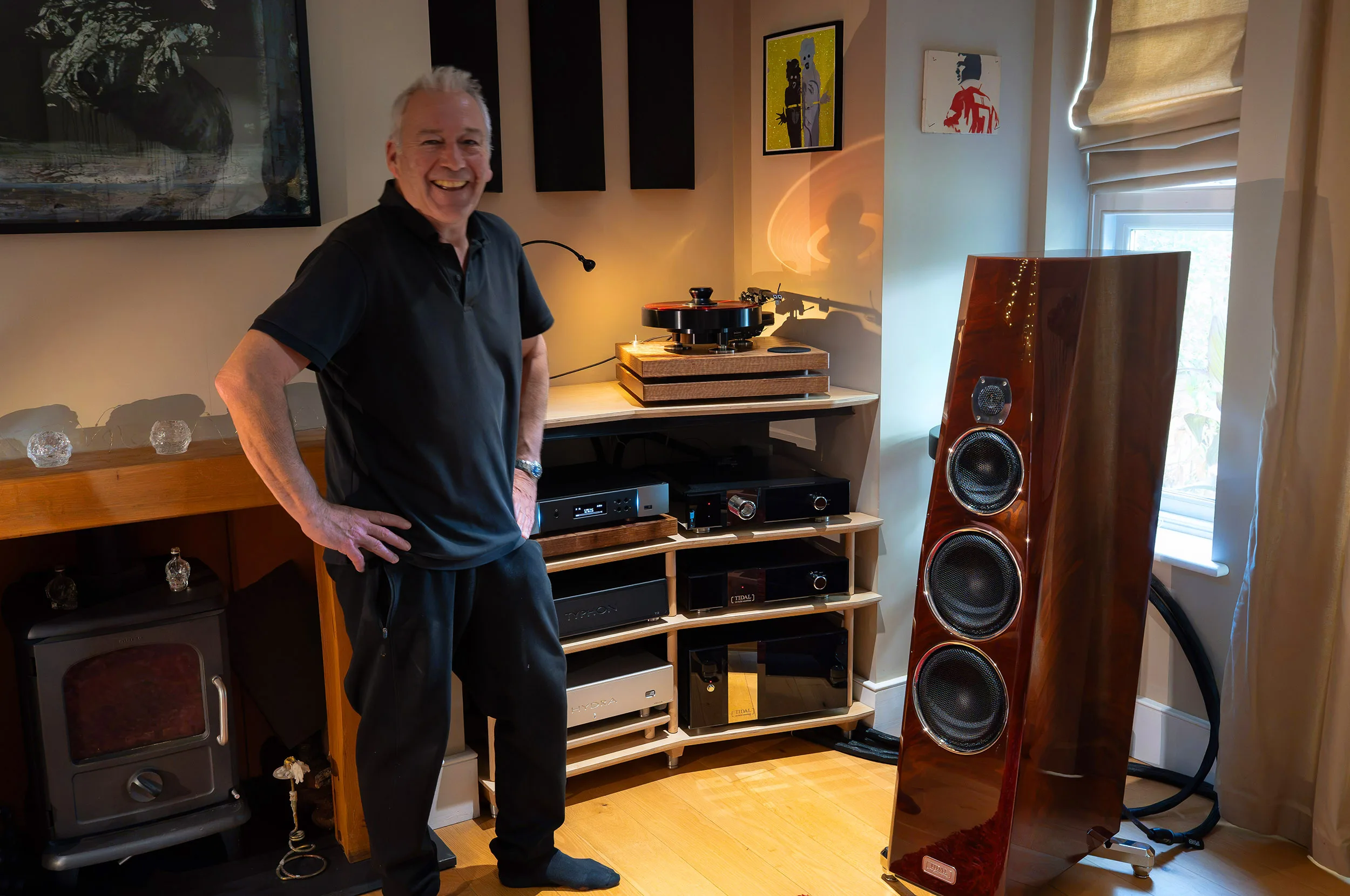
Alan first walked through our doors around twelve years ago, and what followed was never about simply adding more boxes to a rack, chasing the latest trend or seeking some ultimate expression of materialism and ownership. Rather, it has been a thoughtful, unhurried journey of authentic discovery, with each step bringing him ever closer to the music he loves. Along the way we’ve shared ideas, solved the occasional puzzle, celebrated each new arrival and, most importantly, built a genuine friendship. As in life, the real nectar is often found not at the mountain’s peak but in the odyssey itself, in the succession of new discoveries and experiences that unfold along the voyage.
This really is what Lotus has always been about. Not simply supplying hi-fi, but helping people find lasting enjoyment in music, offering the very best guidance whenever it’s needed, and being there for the long term. Watching a reference level system blossom over many years, and working with customers like Alan is the highest level of reward for us, it really is the very best of being a high end dealer.
You may not know that Lotus actually began life as a second hand hifi business on eBay. Unsurprisingly, given how ubiquitous the brands were at the time, we sold a vast amount of preowned Linn and Naim equipment, so many of our earliest customers discovered us that way. Away from eBay though, our own website was steadily becoming something quite different. We were carefully building a portfolio of new high-end brands that we staunchly believed in and, in those early years, few products excited us more than the Allnic phono stages from South Korea. They were one of the very first brands we championed from new, and we talked about them … a lot.
Allnic happily also already had a loyal following on UK enthusiast forums like HiFi WigWam and Pink Fish Media, so arranging a home loan of the then entry-level H-1201 phonostage became one of the most common ways for customers to experience Lotus for the first time. The H-1201 also proved to be a remarkably effective way of recruiting LP12 owners. If you were coming from something like a Naim Superline, Urika or Uphorik, the little vacuum tubed Allnic was often nothing short of revelatory. Real tone, harmonics and imaging … for the very first time. It was cost effective too, only £1995 so considerably more affordable than the best offerings produced by Linn or Naim. If you could woo Linn Sondek owners with a valved Phono preamp then chances are they would investigate your amplifiers as well at some point too.
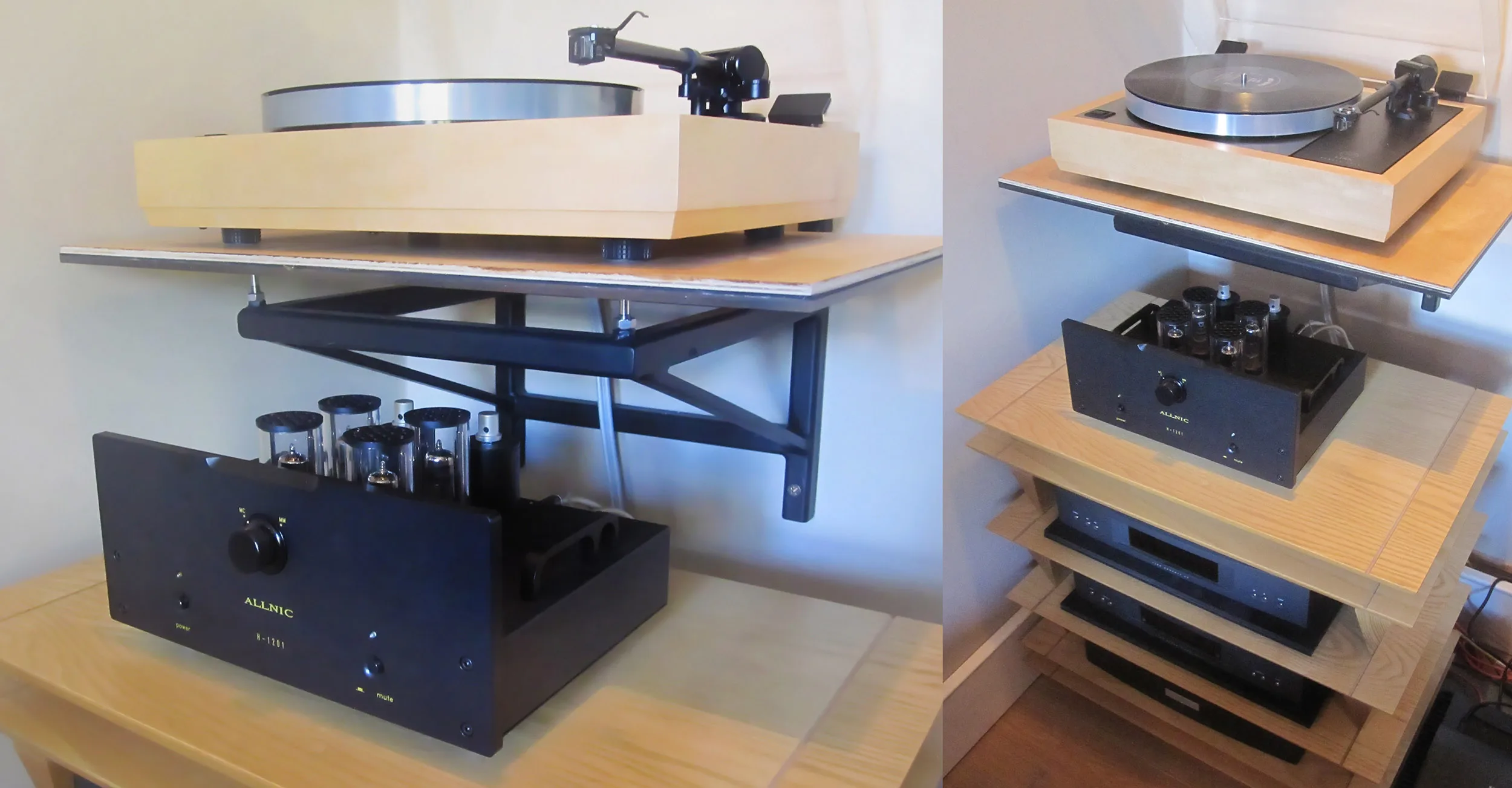
Alan was actually an occasional reader of the Linn forum, albeit a reticent one, and he was becoming increasingly cynical and baffled by the oft repeated claims on there that “nothing on the planet can come close to Linn”. The time was right then to explore other frontiers and after being a “Linnie” for some 20 years, he was excited about venturing into new worlds. After seeing our preloved wares on ebay then visiting the Lotus website he too came to learn about the giant slaying Allnic H1201. Alan was fairly local to me so made an initial enquiry by telephone, and after we had offered a decent part exchange figure for his Linn Linto phono preamp, he agreed to a home loan of the Allnic.
A week or so went by and as anticipated I then added said Linn Linto to the Lotus preloved list. We brought something small and understated into Alan’s home, something esoteric and unknown from Korea, something relatively inexpensive compared to the competition, and it quite literally transported his system to a whole new realm in a way that the brands he was familiar with, could never get close to. It opened his mind to a completely new world. It was a powerful moment, and one that instantly cemented much trust and belief in Lotus Hifi and what we do and sell.
This was the 20th January 2014, and the rest as they say is history but grab yourself a coffee for the rest of the tale for all its twists and turns.
OUT OF THE LINN SONDEK
The following year, Alan arrived at his next upgrade opportunity and, having been schooled in the “source first” philosophy, he was minded to change the deck next. Ordinarily we would build a system around speakers first but on this occasion the order did not matter so much as I was sure we would end up transforming the entiresystem. I had also explained to him that upgrading an LP12 – even a high specification example – was a remarkably simple and fuss-free process, far less vexatious that changing speakers.
This may surprise you, but Alan was comfortable taking my advice on the deck without a shop demonstration. This hints again at the psychological power of the Allnic change and the resultant trust that Alan had already built up for us just through a single upgrade. Purchases without demonstration also happen far more often than you might think, and it rather neatly exemplifies the beauty of building a deeper relationship with a dealer who understands your musical choices and shares your sensibility about what sounds good – and what doesn’t. Once a customer has a system that is “Lotus aligned”, the next upgrades are typically very straightforward affairs. There’s often no need for long, drawn-out demonstrations, exhaustive comparisons or, dare I say, excessive navel gazing over the selection process. The shared understanding and the established pathways and trajectories are already in place. Many customers before you have taken the exact same leap you are about to; you are unlikely to be the first.
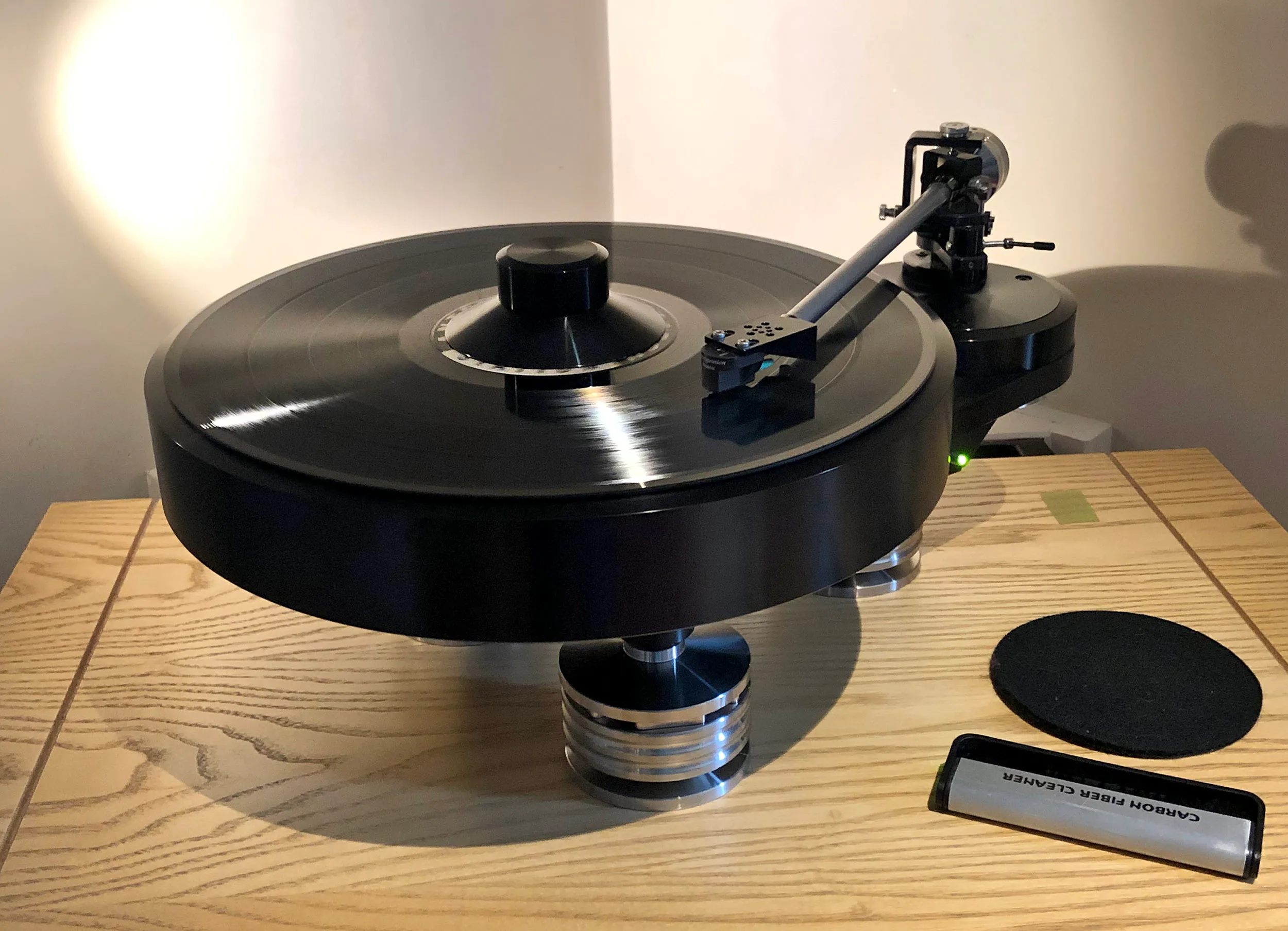
So I agreed with Alan that we would install a new Brinkmann Bardo turntable into his home and, if after living with it he wasn’t completely convinced, I would happily take it back into stock and perhaps sell it on as an ex-display or swap it with my existing demonstrator. In a sense then, this was a home demonstration but with a bit more implied commitment. It conveniently illustrates the more informal and helpful way in which we like to work. The process of retail has a legal structure of course but we often will bend the rules to your convenience and refrain from ever throwing any small print around. Making sure that the customer is completely happy with his purchase and his whole system takes precedence over everything, even if that means returning items, borrowing items for an extended time or even changing orders at some point or other.
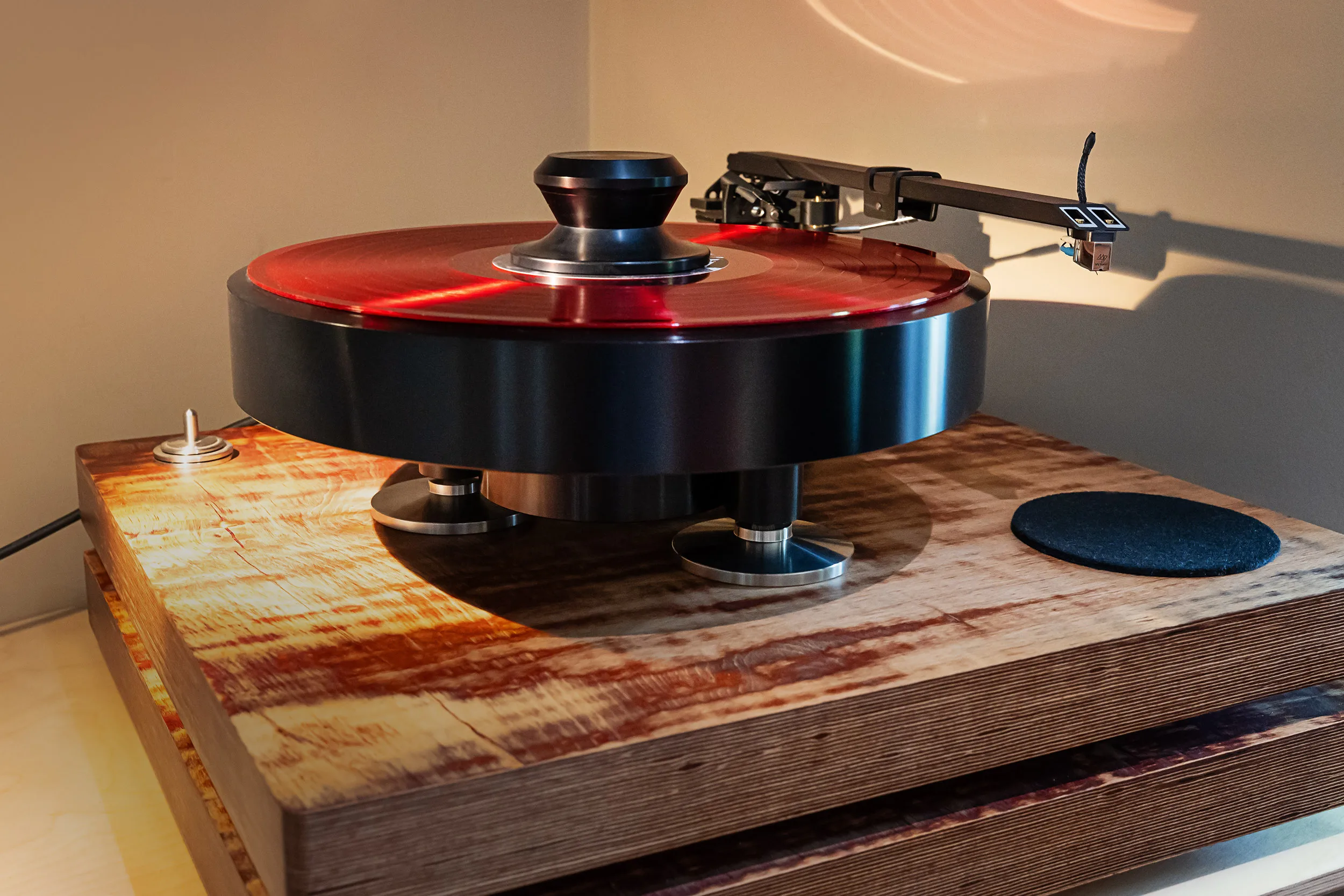
So as you might expect, it wasn’t long before the LP12/Cirkus/Keel/Lingo/Ekos 2 also found its way into the Lotus used classifieds. After the Allnic Alan trusted our knowledge, taste and ability to choose superlative equipment but now, after the very successful turntable change, he was potentially a Lotus customer for life. The Bardo proved not only more neutral, realistic and truthful, but also superior across all the major sonic parameters: soundstage, dynamics, speed and precision, coherency and, of course, that magical quality we call “musicality”. In point of fact, so good is the basic Bardo that it is the one component that Alan still has today in 2026, some 12 years on. It has remained and survived despite the fact that the rest of the system has been transformed into a whole different galaxy of performance. That is how good the little compact Direct drive from Germany truly is.
DIGITAL AND AMPLIFICATION
For the next upgrade, Alan wanted to turn his attention to the digital. The new Melco brand of music servers had just been acquired by our distributor partners Kog Audio and as one of their closest dealers we were one of the first to sign up. A Melco was also becoming a proven and popular upgrade for pretty much any Naim or Linn digital source so an N1 ZH equipped with SSD drive was a very easy upgrade choice for Alan’s Linn Akurate DS, replacing his former RipNas. The other reason for acquiring the Melco next was we had already worked out Alan’s future pathway to improve his amplifer and DAC. He had heard the Vitus RI-100 amplifier and its integral DAC module at Lotus towers and after a very impressive demo was fully committed to taking that route and it would of course need a streamer/server to function. So not too long after the Melco Alan also swapped out the Akurate DS, preamp and Klimax twin power amp for the big Danish Integrated amp.
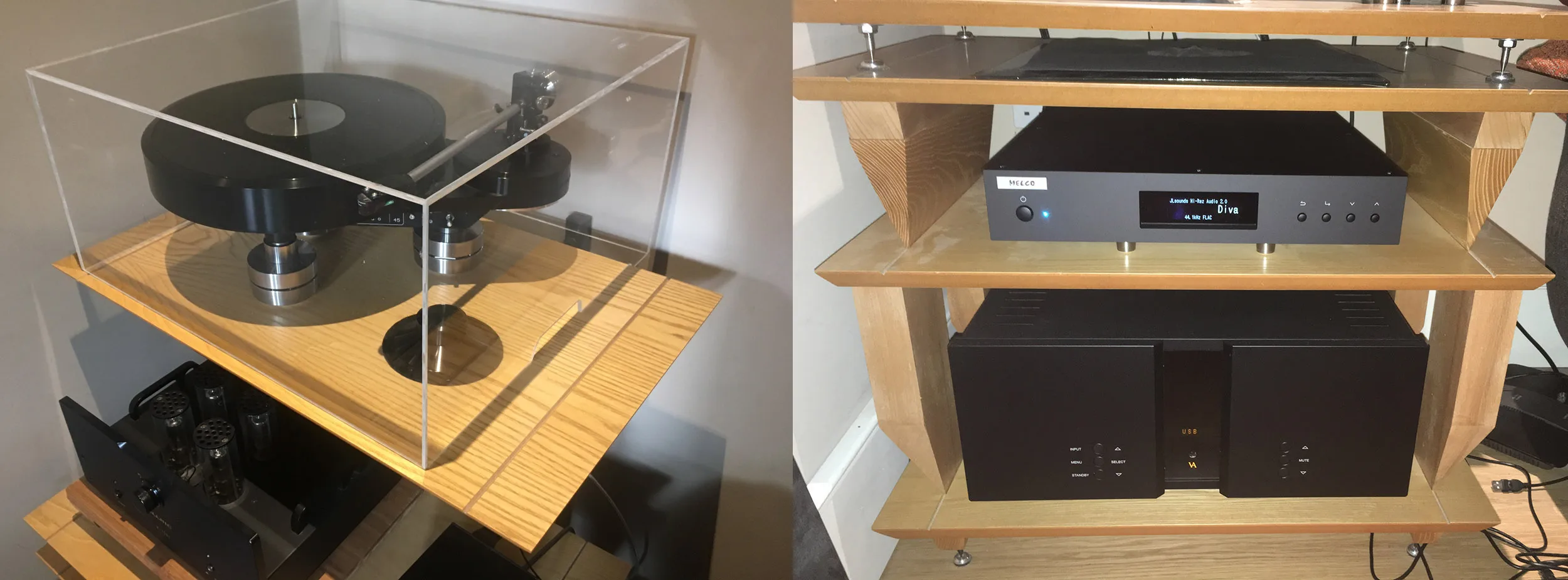
This was an upgrade of sizeable proportions. At least as big as the LP12 to Brinkmann, probably even more profound. In those days the Vitus RI-100 amplifier was one of our most sold units. There were almost no other Vitus dealers in those days or certainly none that were selling the brand in any meaningful quantities but we had discovered the genius of the Danish equipment and were selling RI’s and SIA’s in multiples every month. These small and relatively inexpensive one box amplifiers proved themselves a significant sonic upgrade not just over the best Linn and Naim combinations – 552/500dr or Klimax KK/Solo – but also over other a plethora of other popular pre power combinations commonly found in UK dealers. The addition of the inexpensive DAC module in the RI-100 made the product even more persuasive; in tow with a Melco and a decent USB cable the Vitus digital would happily replace far more expensive rivals like the Naim NDS, Linn KDS/2 and KDS/3. Of course the Vitus RI still exists today in a much upgraded form, the 101 Mk2 and we still have great success with it. It is still a very potent system cornerstone with true high end sensibilities but has now been joined by powerful alternatives from both Thrax Audio and Soulnote.
THE ALL IMPORTANT SPEAKERS
We believe that speakers are the most important component and a system should typically be designed around them. In Alan’s case though, his Linn phono stage and mid level Linn amplification ideally needed to be upgraded first to get him to a base level of performance to best choose a loudspeaker and this is exactly what happened. The Avalon Transcendants were themselves an ex-demo opportunity and whilst Alan has never shied away from buying new, like many customers he has always been happy to make a saving on a preowned item if it was indeed the correct choice for him – rather than having your system guided by available bargains which is never a good philosophy.
Back in that time, Vitus/Avalon was one of our most popular synergistic combinations and a sound that we pioneered and put into people’s homes for many years. It has always been a fabulous combination with a like-minded sonic philosophy from both brands. The Transcendant floorstander was one of the first “new wave” Avalons which later gave birth to the current PM range. It had speed and dynamics that many of the older models such as the Indra and Eidolon lacked. Alan generally plays a lot of electronica, trip hop and dub so the Transcendant represented a great choice. The RI-100 amplifier too always had plenty of punch and propulsion and enormous bottom end heft and stability.
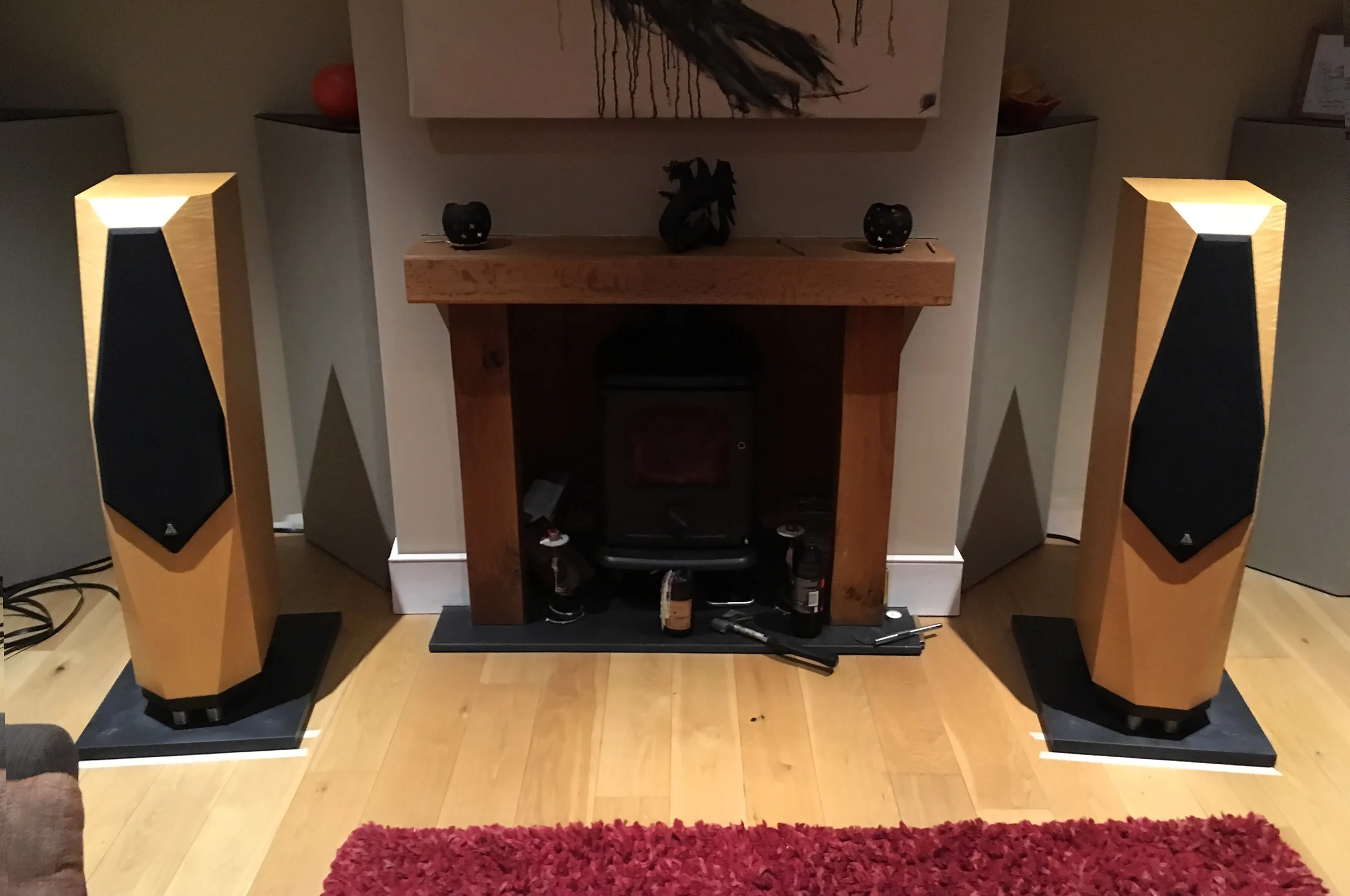
Once the Avalons were in situ, together we really had reached a bit of a milestone. This was now a true Lotus system. A smattering of stillpoint footers under the speakers and equipment, and some TelluriumQ sliver diamond speaker cables completed the picture, a fully fledged Brinkmann/Allnic/Vitus/Avalon rig.
We have a saying or analogy here pertaining to system building and that is the strong advise to try and “get yourself into the nightclub”. That means finishing the system off at every juncture and banishing any poor or noisy component from the chain, no matter how seemingly harmless or inconsequential. One mid-fi or average component can ruin an entire system and a fully completed and perfected system will always outperform one with more expensive flashier boxes but with holes, omissions and weaknesses littering the complete setup. If you made it through the entrance into the nightclub then guess what, you might not be on the top VIP table with the best champagne but you are still enjoying exactly the same music, vibe and atmosphere as everybody else. Just don’t be the guy outside waiting in the queue, who can only just about hear the faint rumble of the DJ inside through a multitude of brick walls, with an incomplete mishmash of a system that hasn’t achieved a respectable noise floor and true high end status.
When a customer reaches this point – low noise, linear and neutral throughout – then it becomes plain sailing from there onwards. Not only are future upgrades easer to pick and choose but improving the system becomes far more predictable and fuss free. Upgrades also begin to give so much more bang for the buck too because the system is highly transparent and well balanced to start with. You get to hear any improvements so much more and smaller alterations make more of a difference.
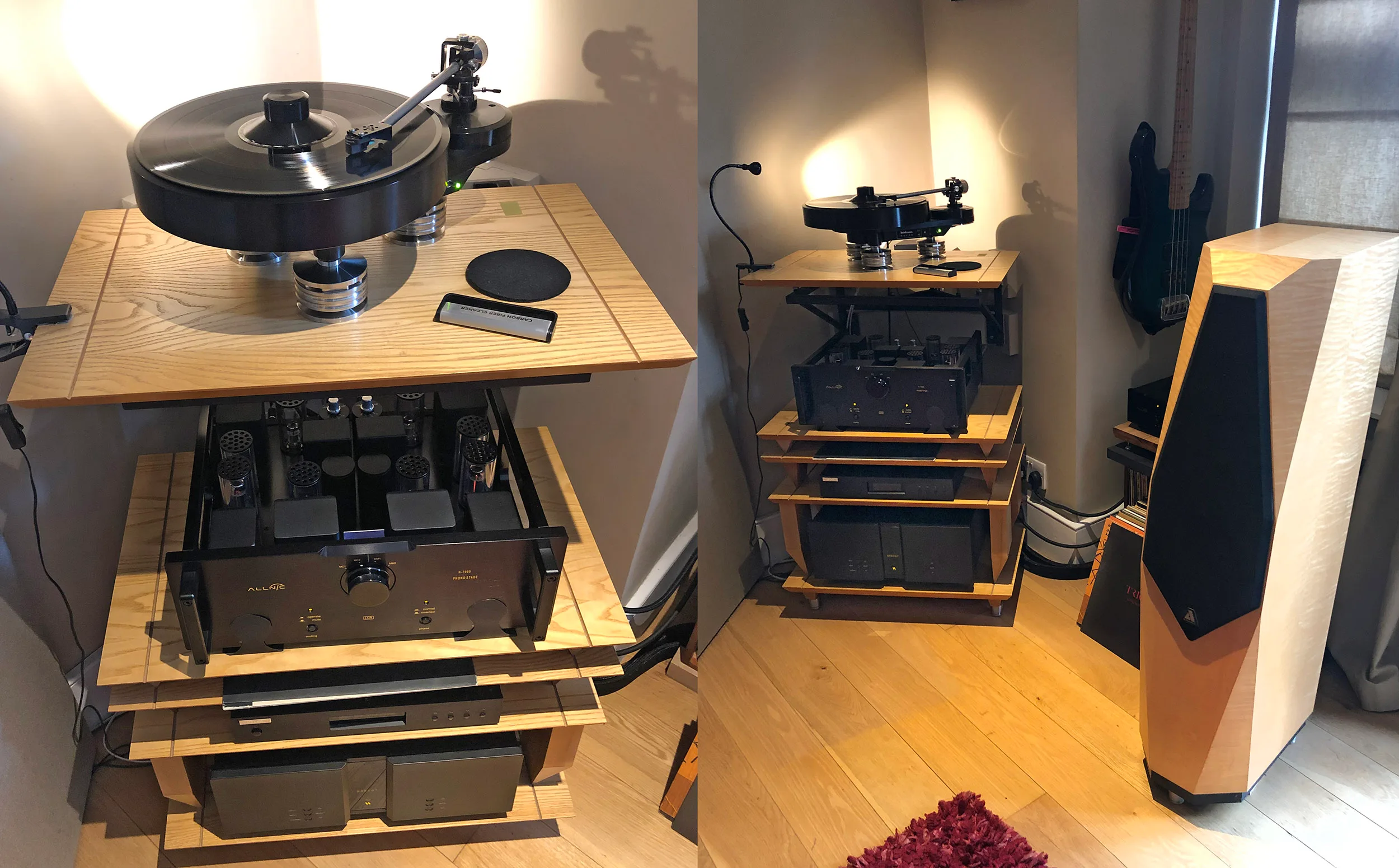
So in the winter of 2017 we had reached a kind of stabilisation point. The system was used every evening, more than ever before, the investment and development really paying off in a big way. Alan being Alan though, he couldn’t help himself and investigated replacing the little H1201 phono preamp with the big dual chassis Allnic LCR H7000 and it was an easy decision. It elevated all aspects of the Vinyl by another large factor – dynamics, space, harmonics, detail, you name it.
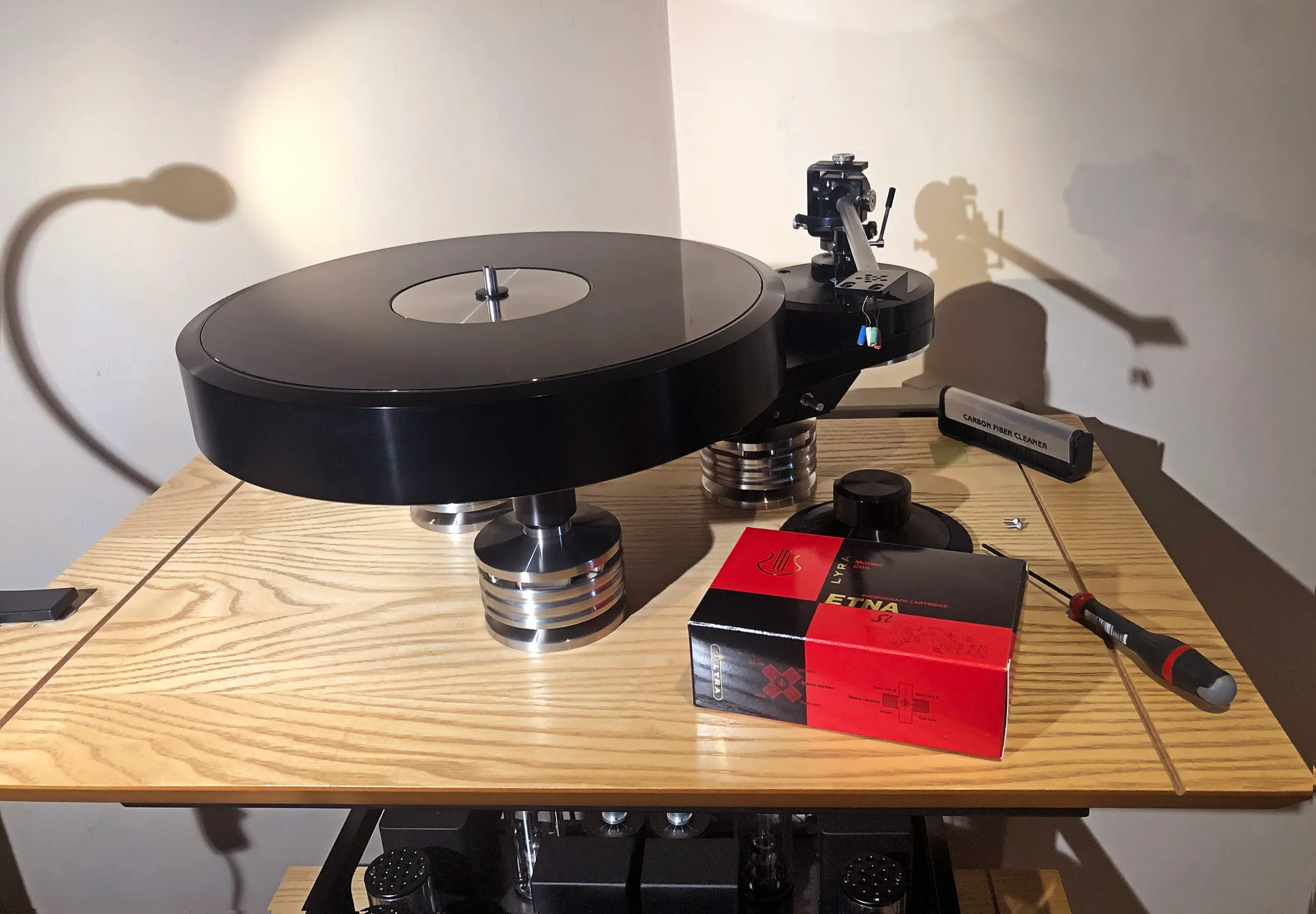
There was definitely a quieter period though and from memory the only real upgrade we performed in the years immediately after those times was bringing the Vitus amplifier to Ri-101 status – a no-brainer inexpensive upgrade – and treating the Brinkmann to a Lyra Etna SL moving coil replacing the old Transfiguration Phoenix. From buying his first separates when he was only 17, it had been a long old journey and a bit of a seminal milestone. In his own words regarding his system: “It’s always been great post Linn. Most sane people would have stopped there.”
“At 17 I had a Technics deck and amp with Wharfedale speakers. Then on to Rega 3 with NAD 3020 and MS10 speakers.”
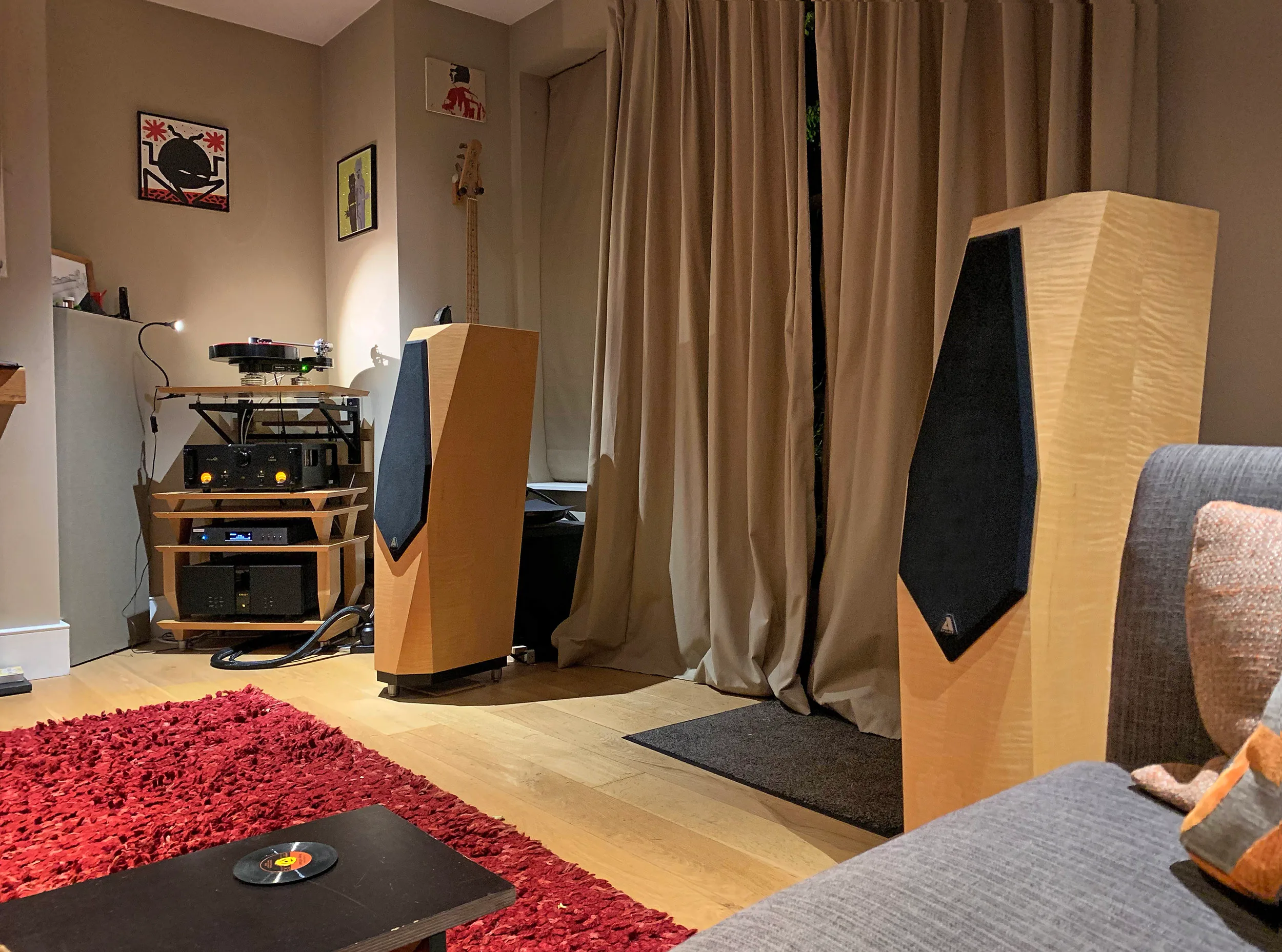
PHASE 2, THE COVID YEARS
Some time after that in the middle of 2020 Alan then embarked upon what I like to consider phase 2. Many people come to us wishing to fix a system then leave it alone for good, or to make a one time purchase to build a dream system for life. Invariably though, and to their surprise, they end up developing the system further and further and lavishing even more money on the hobby. The reason for this is very simple, its because the enjoyment they are getting from the original system far exceeds what they expected an they are spending more and more free time with the Hifi. Their enjoyment of music in the home was taken to another level by what we created for them and because of this more profound level of pleasure and gratification they are actually keen to apportion even more money into this part of their life. This is always a sign that we have done our job well; a deepening of the love and engagement with music and the hobby at large.
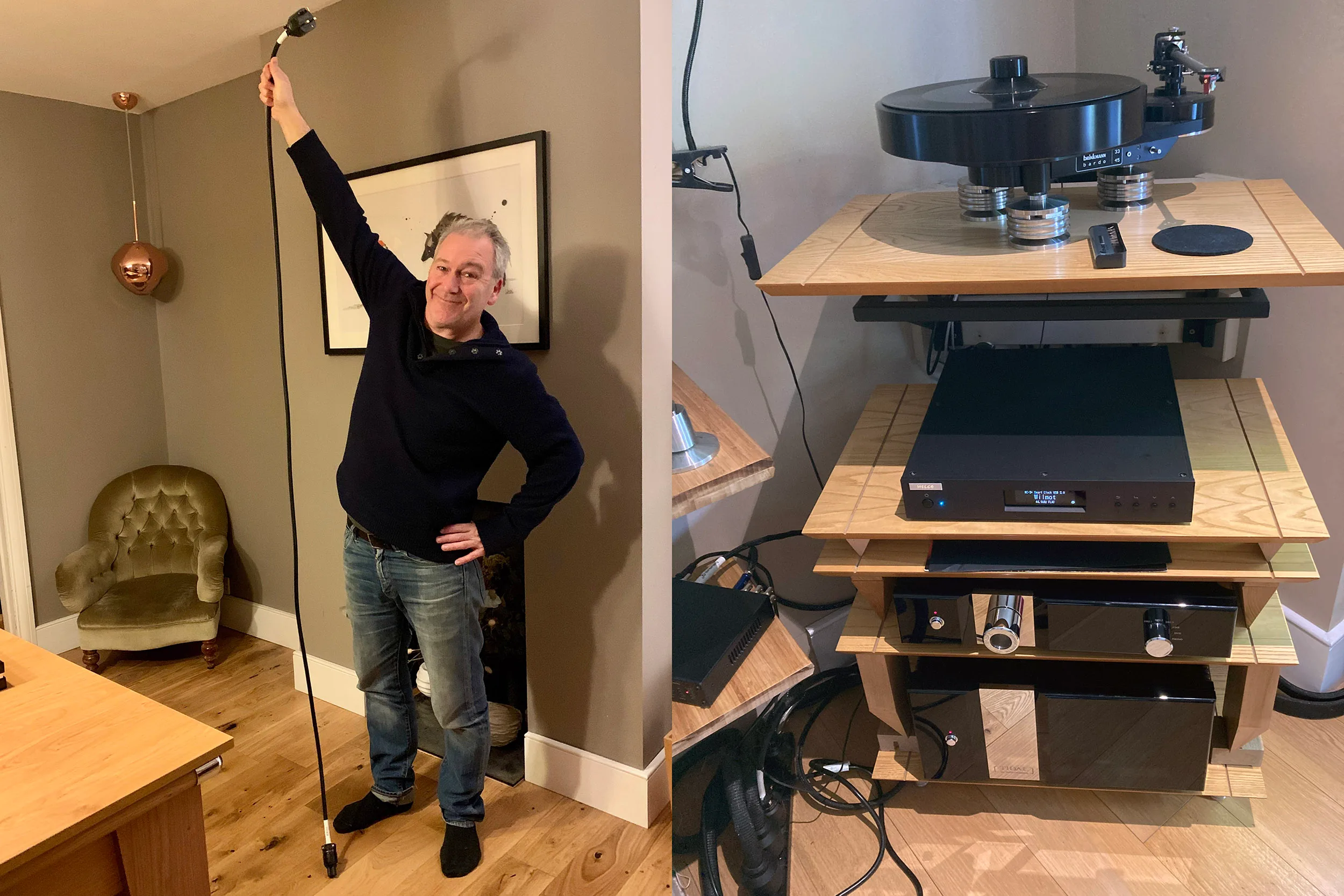
So I would say that after this time, Alan actually accelerated the development of his system and the size of his budget too. The pandemic and successive lockdowns perhaps played a part here too as it did with many customers; an increased investment in the home audio system in lieu of being able to do much else.
Alan had been carefully watching our growth with TIDAL Audio since 2016 and like many, desired one day to become an owner. He had heard a full TIDAL system a few times at the Lotus demo room so that had planted the seeds too. Fortuitously, we took in a preloved TIDAL Preos Dac/Preamplifier and Impulse power amplifier and within a couple of days of it appearing on the classifieds page Alan gave me a ring about it. At that time, both the Preos and Impulse had been discontinued as products but the TIDAL electronics are so high performing that they remain relevant and deeply competitive with the entire rest of the marketplace for years to come after they get replaced. Just last week before writing this article for example we sold a preloved Preos for only £10,000 but as a linestage I would still happily put it up against anything today this side of £30,000.
Preloved TIDAL is always a bit of a gift then. A way for customers to get onto the ladder at substantially reduced costs. If they are part exchanging on top then the outlay is even smaller. We took both units to Alan and needless to say they did not come back. Piping his Melco streamer into the Preos Dac using a Mutec usb/spdif converter he gained a sizeable upgrade to his digital source as well.
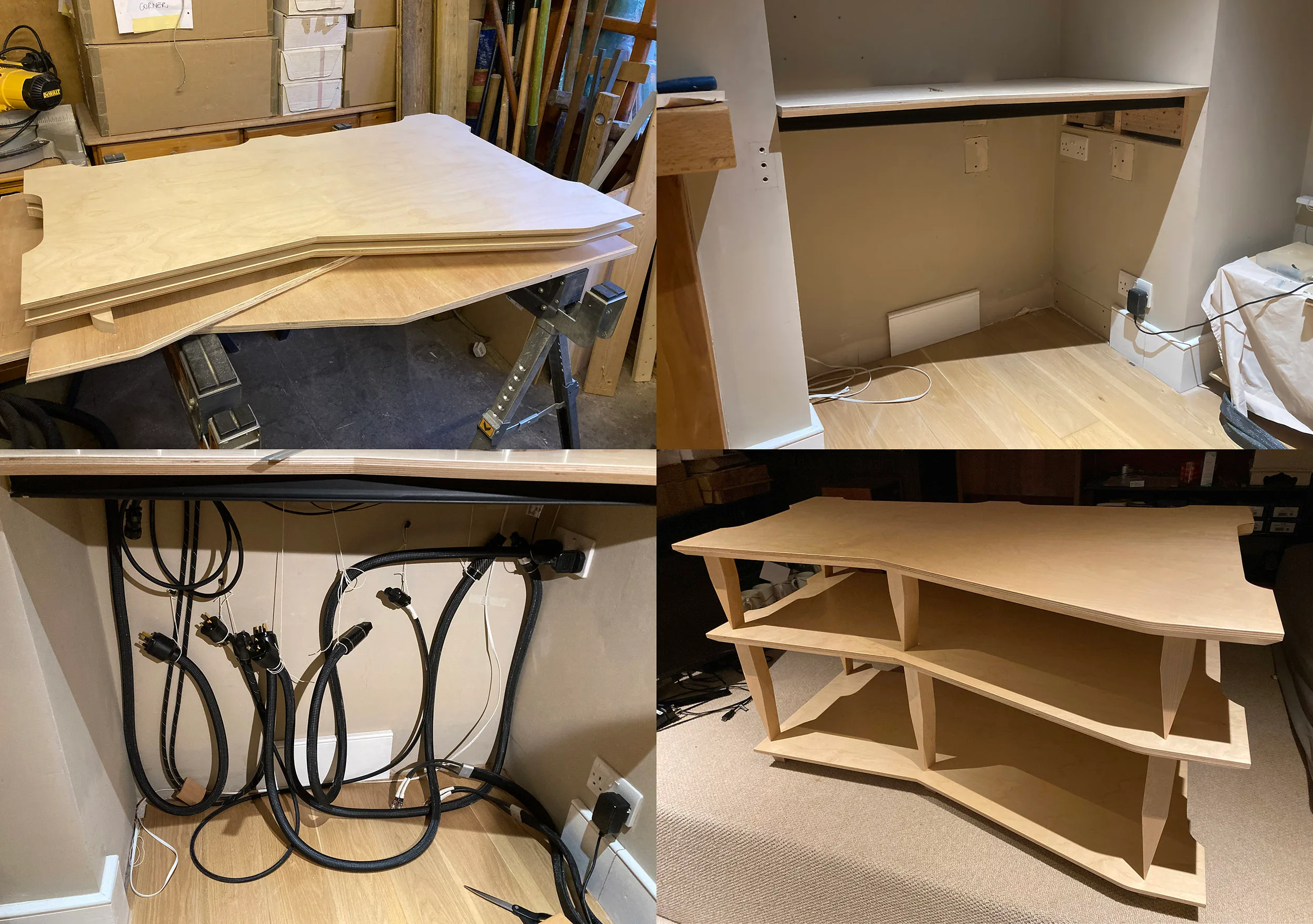
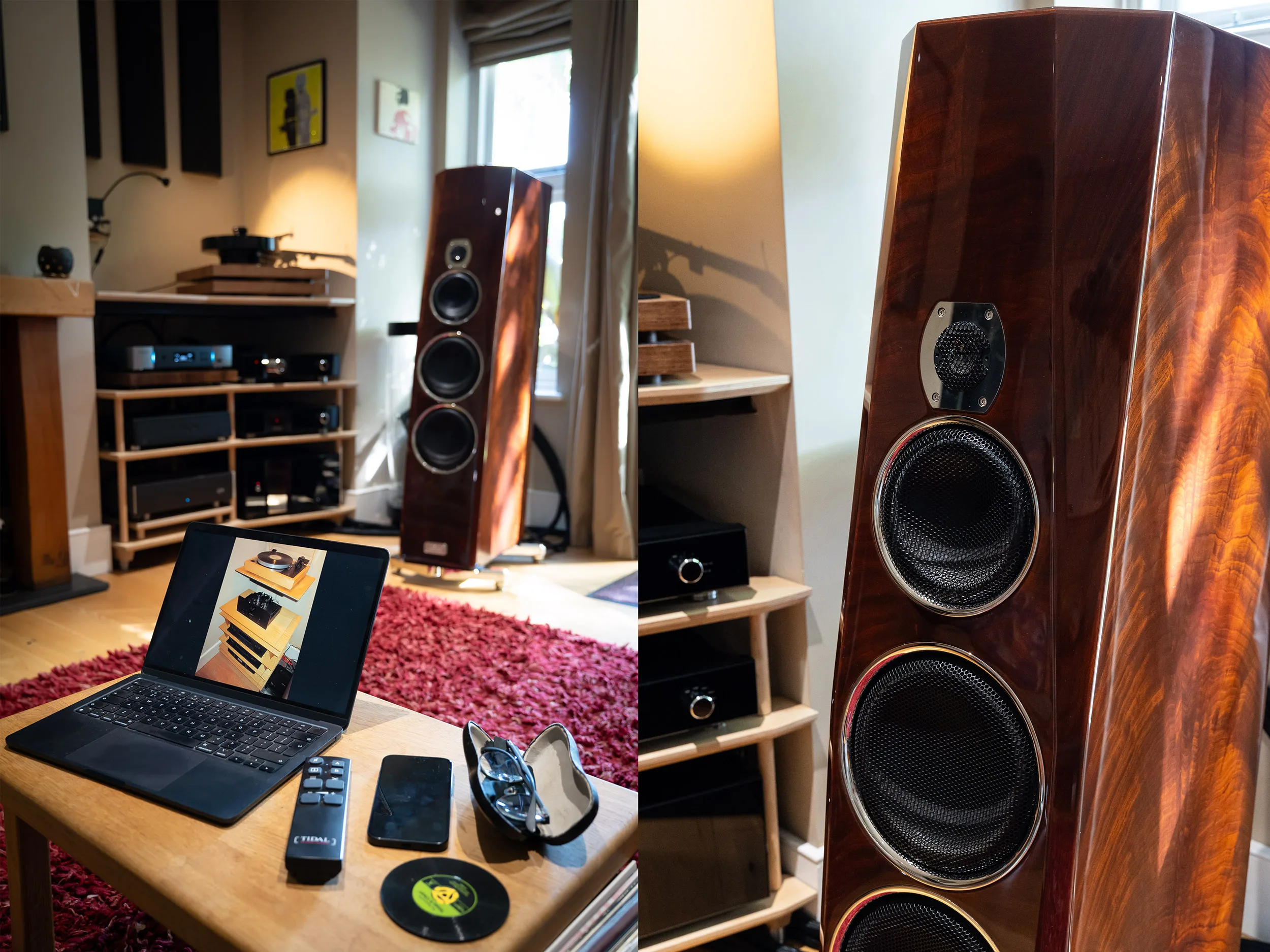
Since meeting us some 7 years previous, Alan had finally become a TIDAL owner. As an engineer with a great skillset in fabrication and woodwork, he also made his own custom rack to fit perfectly into the new space at the far wall and house the higher number of boxes.
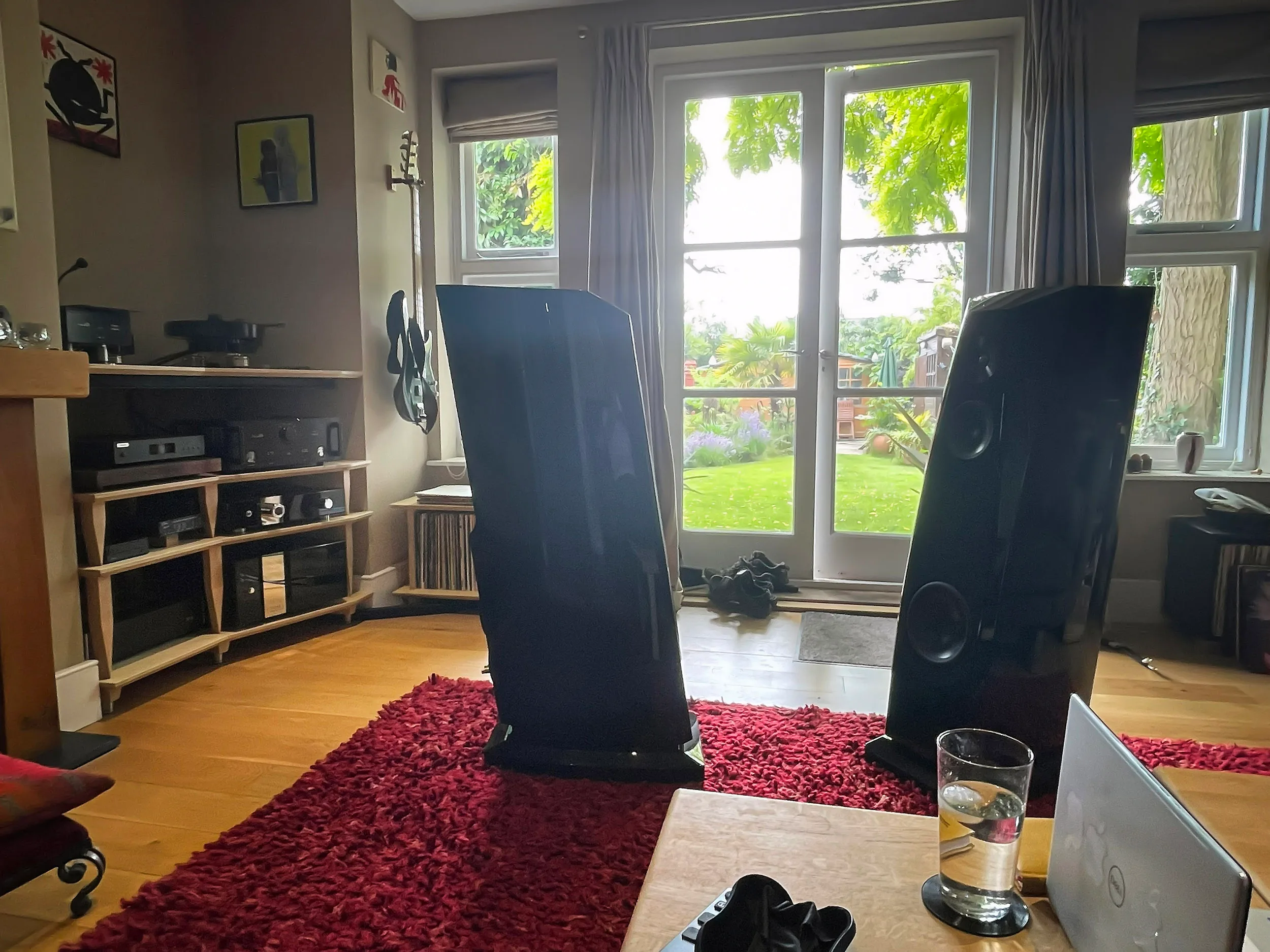
The following year the very obvious move was to balance out the speakers. We always say that a TIDAL system cannot be fully understood unless you have a TIDAL speaker, there is no better partner, but that would have to wait because the new Piano G3 were just short of £60,000 so out of reach at that time. The wonderful Rockport Atria II though at significantly less money were more than suitable – our best speaker at that time below £50,000 – and an enormous sonic improvement from the Transcendant. Rockports always excel in the bass and lead with a meaty, dense presentation that was actually very apt for Alan’s music tastes. We elected to furnish them with a set of Tara labs Muse speaker cables and a Muse XLR between pre and power, one of our most popular choices for the high level systems.
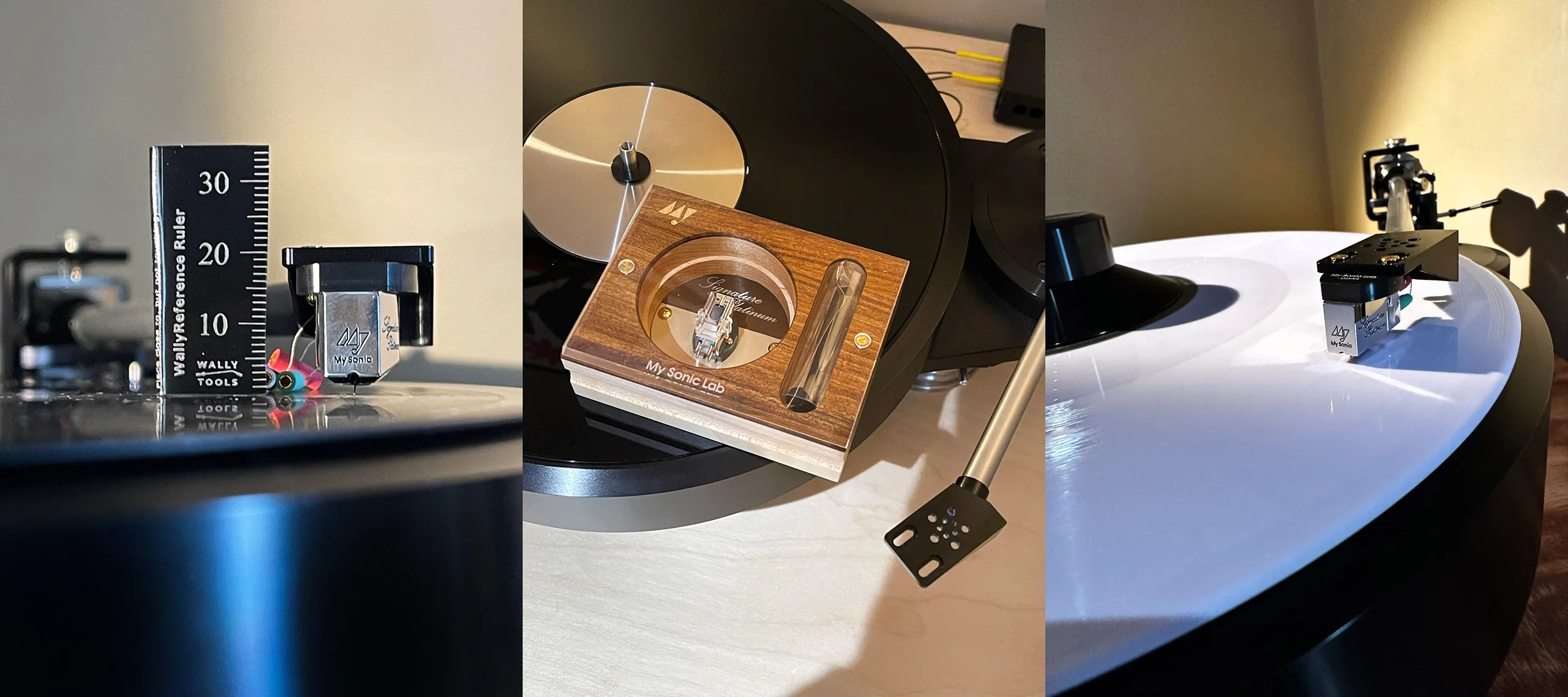
The speaker change had also been preceded with the addition of a Shunyata Hydra Delta D6 mains conditioner and a selection of Shunyata Alpha mains cables so the power in his system was now properly advanced as well. Things must have been going well because at the end of that year over the Christmas, Alan purchased a MySonic Labs Platinum MC, a new addition to the shop portfolio. As wonderful as the Etna is, the MSL platinum takes things a stage further with even greater neutrality and connection to the grooves.
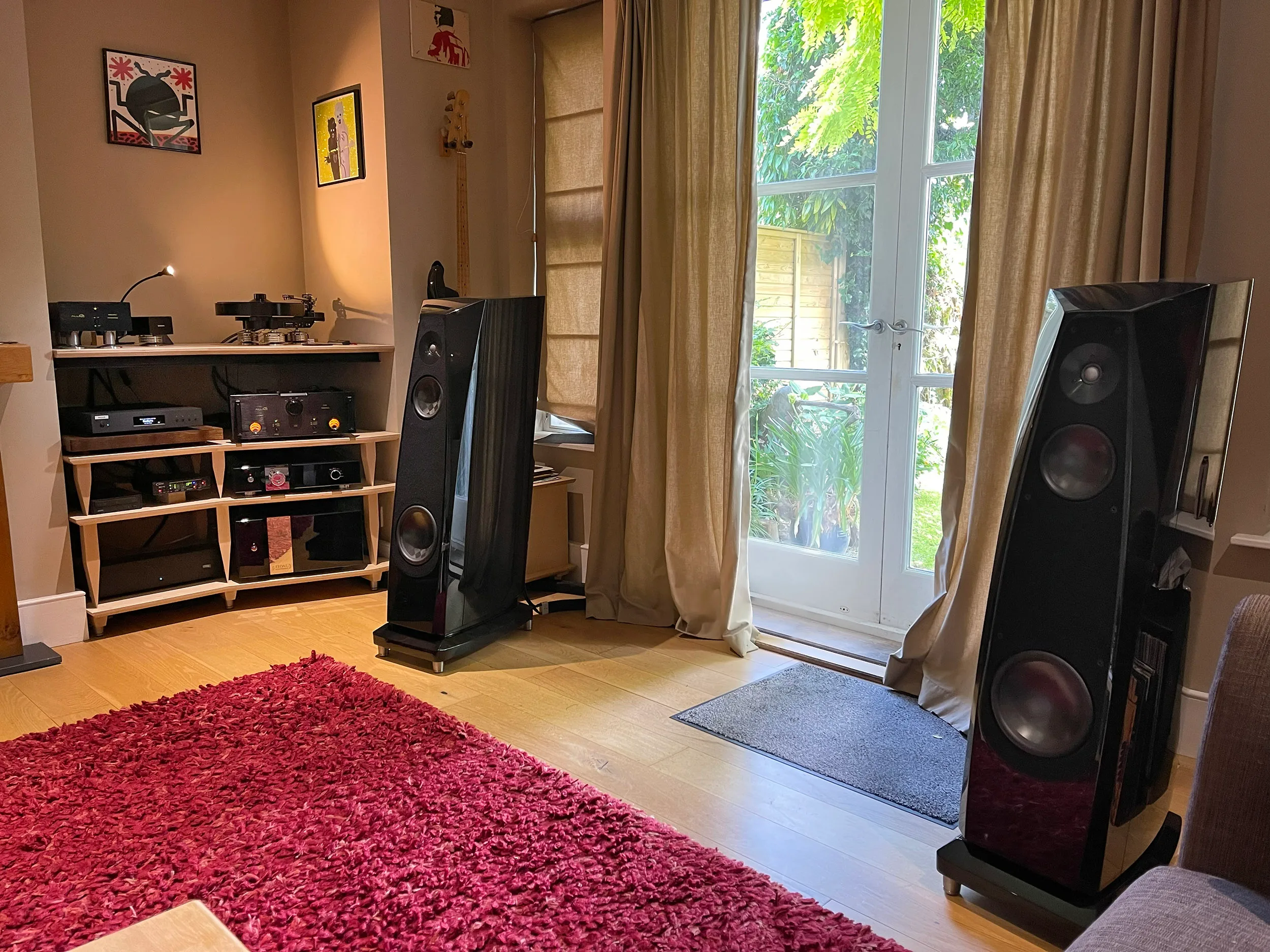
The TIDAL bug had bit hard. In the middle of the following year, Alan made a beeline for modern day TIDAL units. In the summer he swapped out the Preos for a brand new Prisma preamp, a big upgrade on both the linestage and phono sections. I think we gave him all the money back that he paid for the Preos the previous year. The Prisma does not have inbuilt digital so he had to add a separate DAC back into the system and an Ex-demo Vitus RD-101 Dac footed the bill very conveniently here. Later in the year a Tara Labs Grand Master Evo USB cable extracted as much from the digital as humanely possible, expensive for a USB interconnect but we have sold so many of these simply because of how much effect they have on a good digital chain.
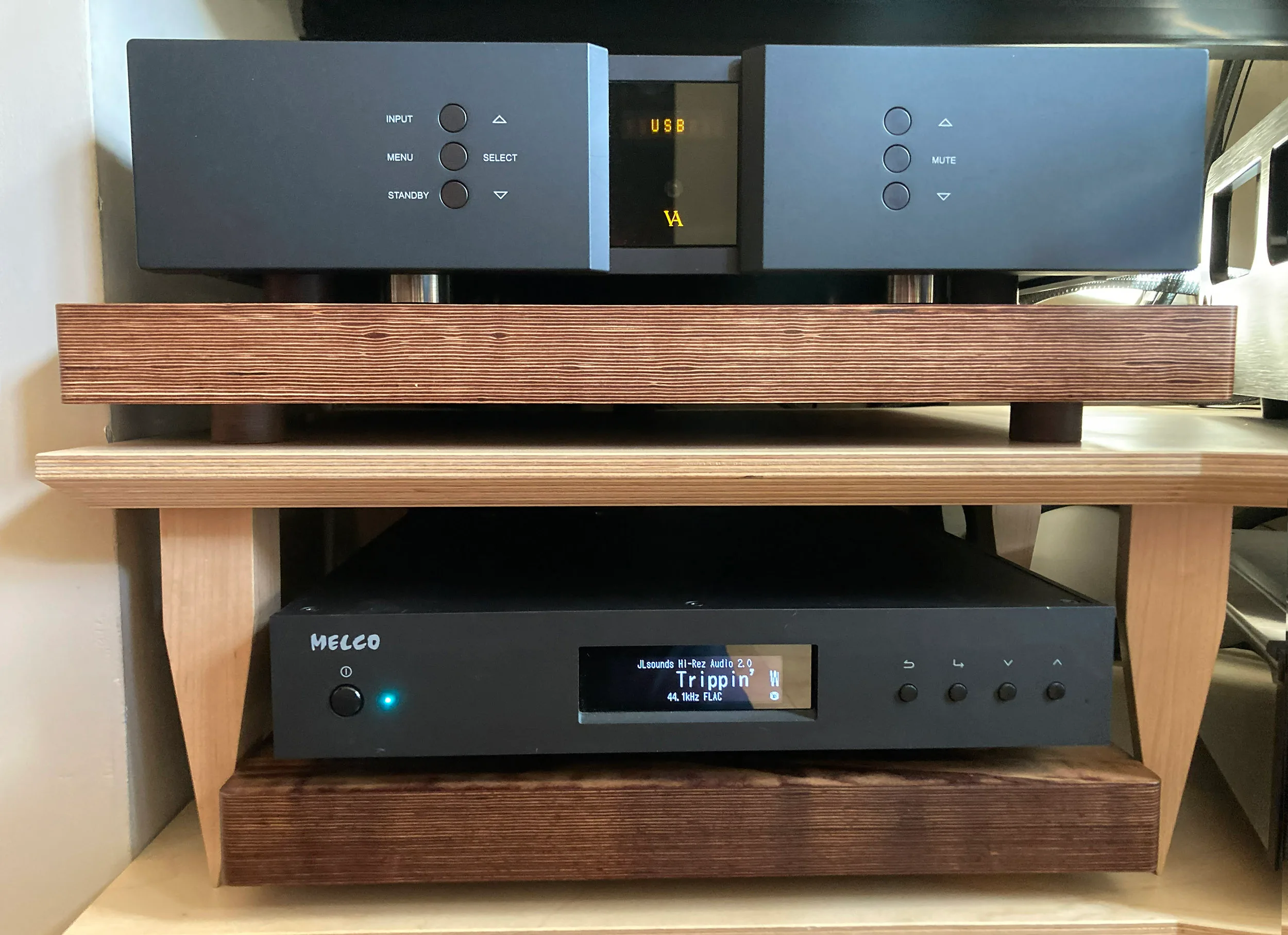
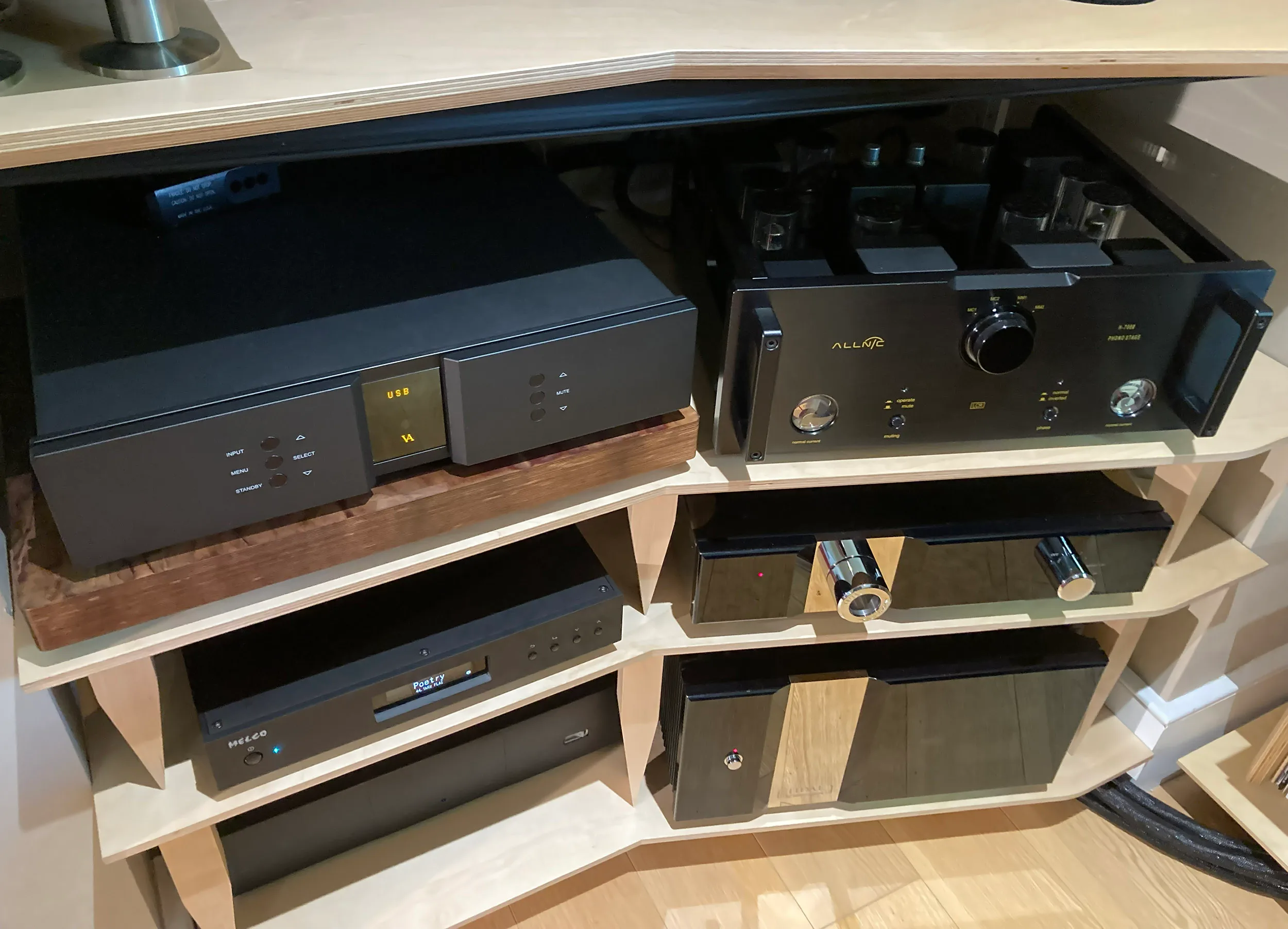
Easter the following year Alan continued his mission of present day TIDAL and changed the Vitus RD-101 for an ex-demo TIDAL Camira Mk2, trading in the RD-101 and the Etna which was now also surplus to requirements. Once again, we gave him back every penny for the RD-101 that he laid out the year before; a 10 month equipment loan free of charge. You won’t get that at Rumbelows !
At Lotus, the hierarchy of DACs goes something like RD-101/Soulnote D2 to Brinkmann Nyquist to SCD-025/Soulnote D3 to Vitus MP-D201 / Thrax Maximinus to Wadax Studio Player to TIDAL Camira. So you can imagine that this upgrade was enormous for Alan, 5 or 6 jumps all in one go. We can only improve upon Camira digital by selling you a TIDAL Bugatti MC-1 or the illustrious Wadax Atlantis Reference with little change from £300,000.
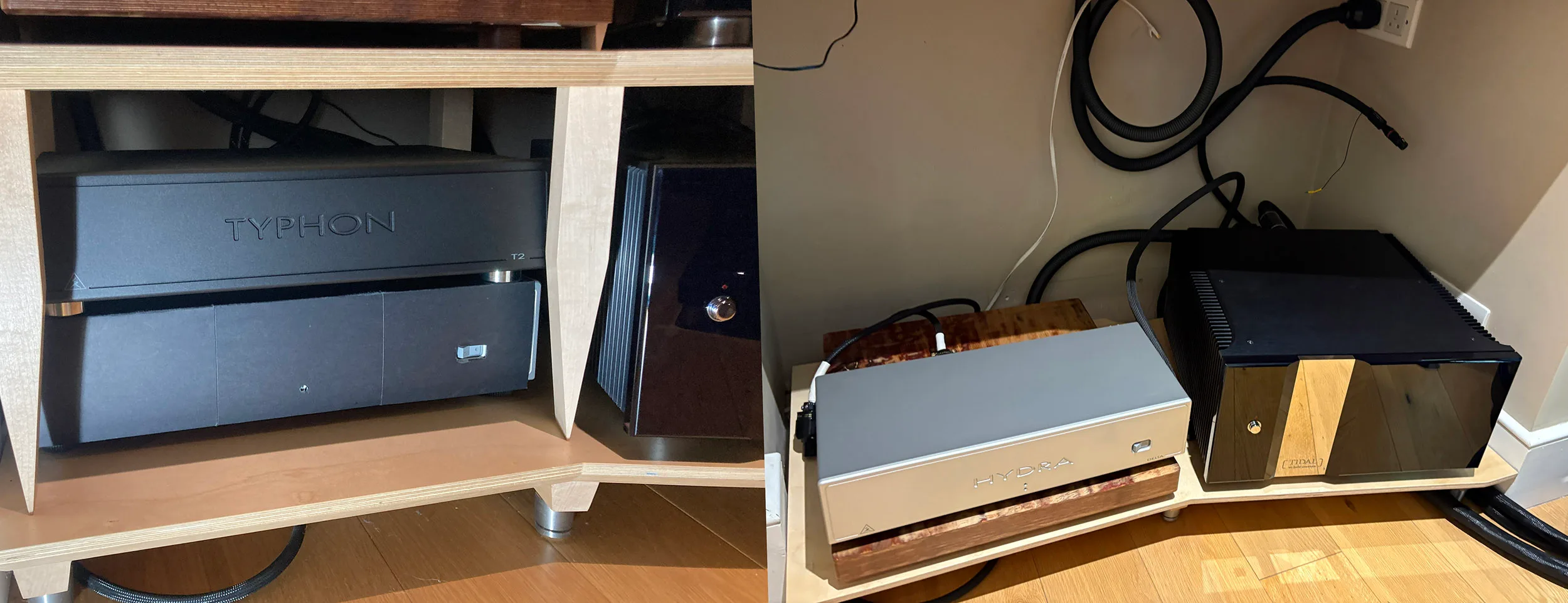
The Camira upgrade was in 2023 so fairly recently. In the years following that, there was less activity apart from a Shunyata upgrade, Hydra Delta now supercharged by the new Typhon T2 and then some small but highly pleasing accessories such as the HifiStay Dharma record weight and Entreq MixMax t2 speaker terminal gizmos.
“Its always been great post Linn. Brinkmann and Vitus amp were a big jump in resolution and presentation. That was a real eye opener to what’s possible so I guess enjoyment levels really went up a notch then. At that level the various tweaks with cables, isolation etc were quite noticeable, so satisfying and with a feeling that they were worth doing. ”
ROAD TO CONTRIVA
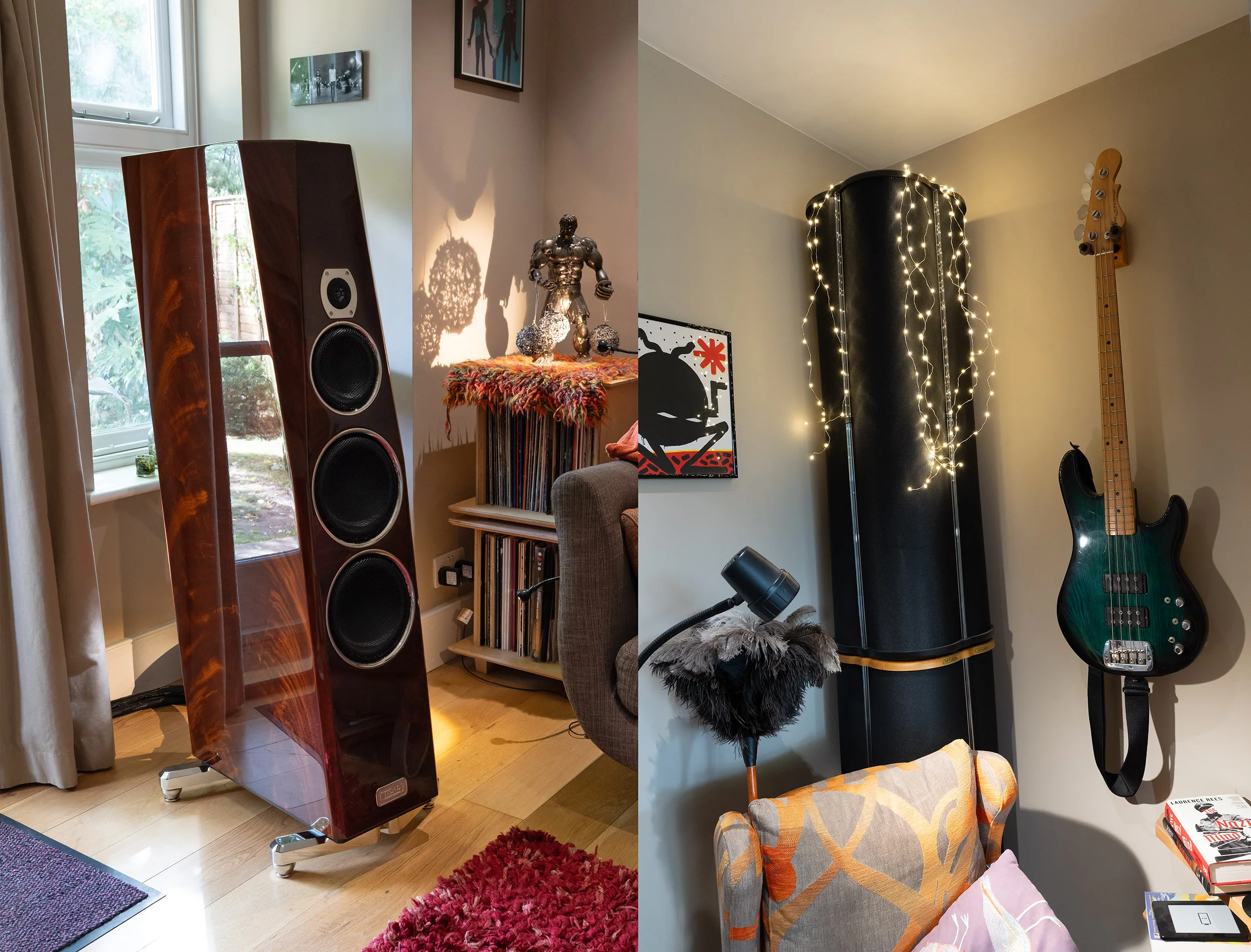
The next big change was maybe one of the most powerful and most satisfying since we started all those years ago, finally finishing the system off with a set of preloved TIDAL Contriva G2 speakers. A customer quite local to Alan had ordered the huge TIDAL AP1 active speakers and so we knew his Contriva were going to be traded in upon delivery. Alan undertook demos at Lotus and after lengthy discussion decided to aim for the bigger Tidals.
Now bigger, better speakers with high transparency and control in the bass always give less room acoustic problems than a lesser speaker – even one that is much smaller – but Alan’s room has never been perfectly linear and we advised him that fully treating the room at the same time would not only allow the Contriva to breathe much better but allow louder volumes and just far greater clarity and linearity no matter what the system.
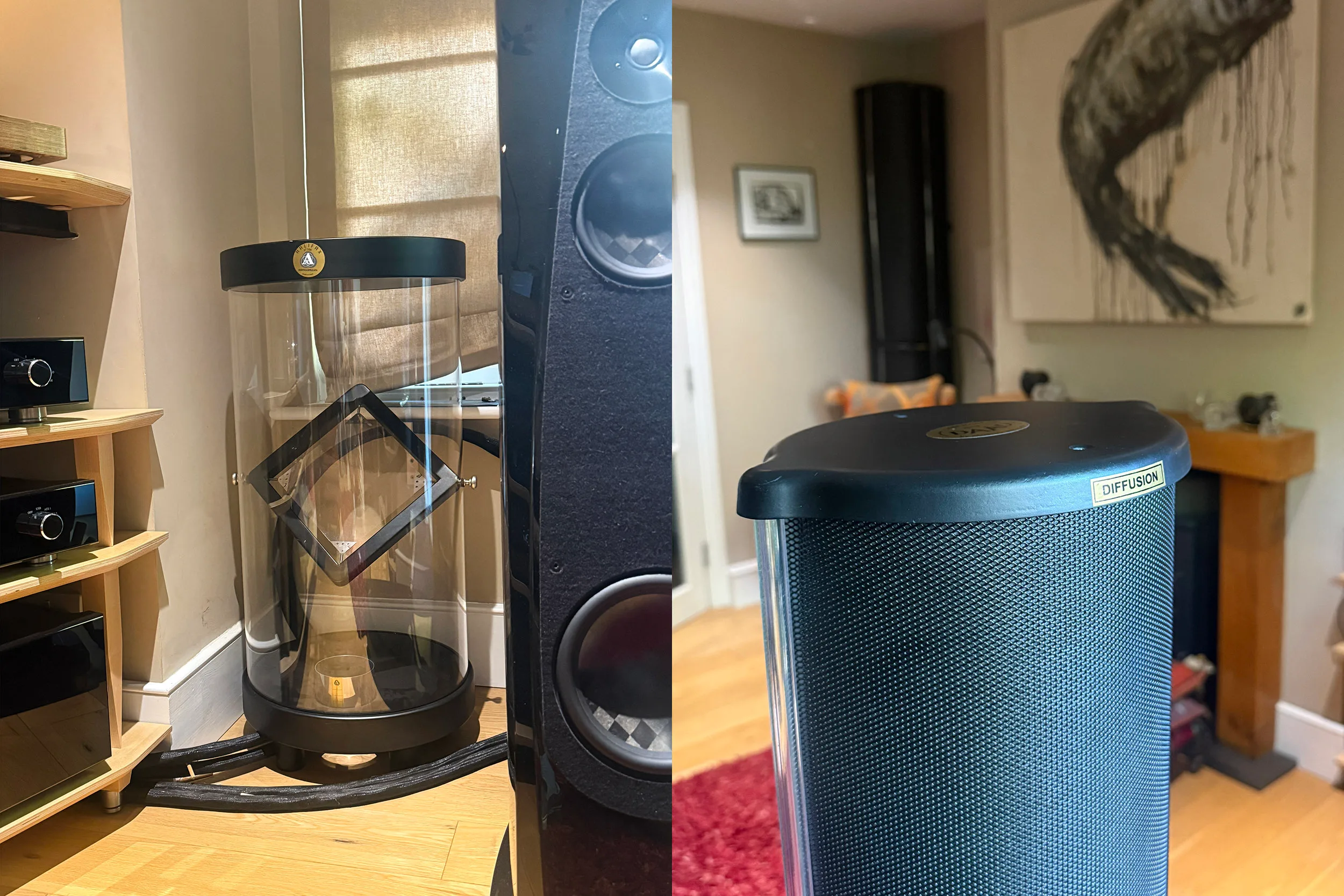
Those of you who have spoken with me at length about system priority will know that we believe that the room is fundamentally the most important part of any system. It precedes everything and if the customer is able to populate his listening room with the various devices from Applictata (many people sadly aren’t able to do this) then we advocate it very strongly. We have treated a number of rooms now and most customers state they wish they had done it years ago.
The Acustica Applicata system is a layer cake of treatment devices – diffusion and absorption devices and then resonators – which is carefully calculated specifically to your space. We plot your room in a diagram and then the factory perform exhaustive analysis on that map and generate a prescription of certain products in specific positions. We visit you, install the products and although there is no obligation to buy, almost everyone does.
Applicata is so much more than a smattering of bass traps and diffusion panels. We believe it’s the most sophisticated passive room acoustic solution on the market. It is a precisely calculated array of controls which make the entire room disappear and create a truly linear sound devoid of nasty reflections, collisions and standing waves. It is also for obvious reasons, infinitely preferable to any electronic method and tackles so much more too.
The sound can be infinitely tuned as well, the amount of bass, the tightness of bass, its position in the 3d, the relative air space and darkness of the sound. A system treated with Applicata exhibits exceptional balance and clarity all across the entire spectrum. The result is composure, coherence, simplicity of sound and the ability to play far louder than ever before because of the lack of distortion, harshness, confusion, overhang or boom, particularly in the bass region in the case of the latter.
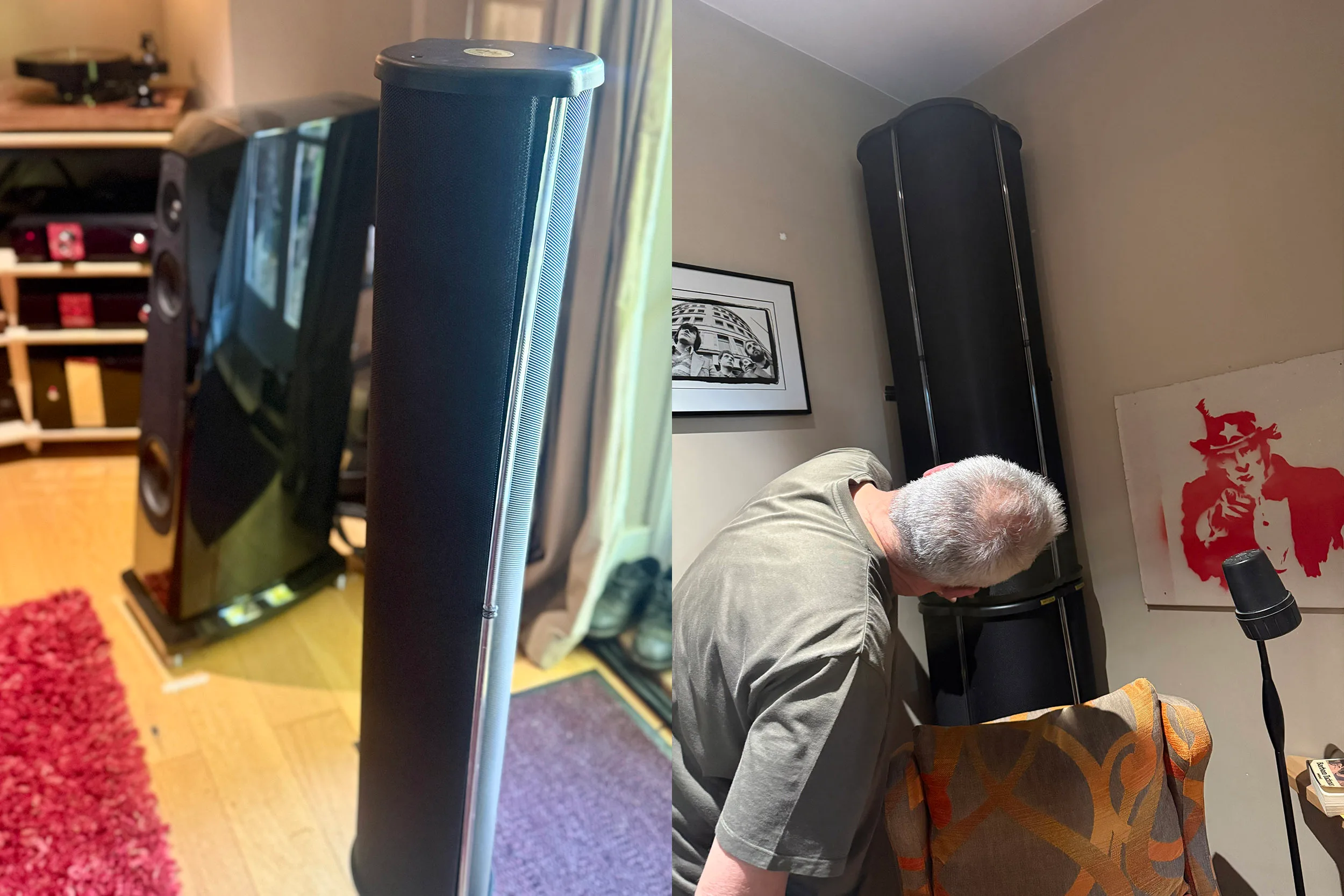
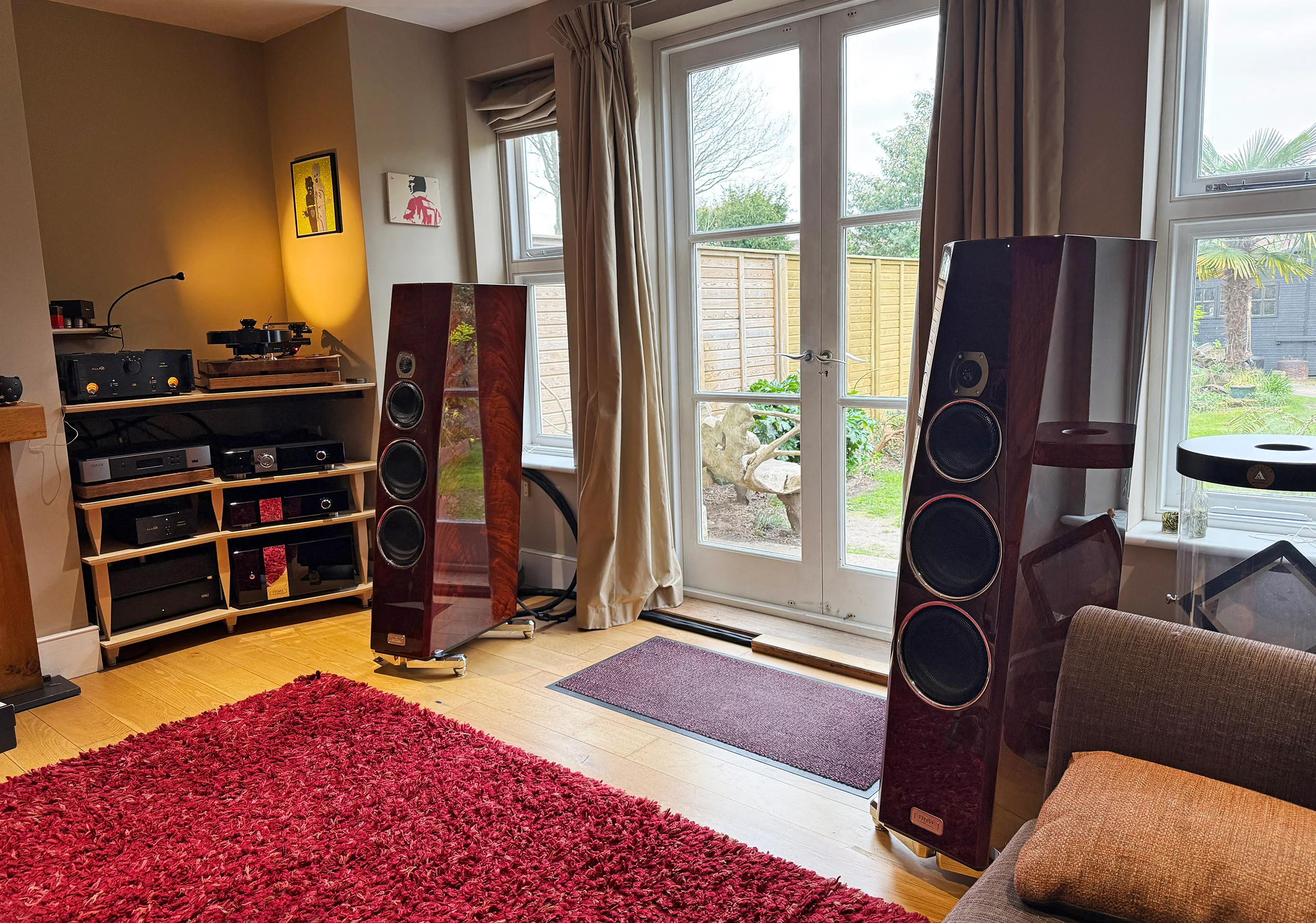
In Alan’s case, it meant that when we finally delivered him the preloved TIDAL Contriva G2 in gorgeous Mahogany, they slotted in beautifully with no bass reinforcement and a gave a calm, relaxed sound free from acoustic congestion or unwanted secondary and tertiary reflections. Just as pertinent though, the lack of room congestion from unwanted reflections and room modes meant that sound was a lot more dynamic with more clean space and order, and hence greater perceivable contrast between the quiet and loud parts. They played as if they were sat in a room two or three times the size, with little restriction on sound pressure levels. That is what Applicata does, it is incredibly powerful and we advise it to everyone who is up for housing it in their listening room.
LOOKING TO THE FUTURE
To finish this story up, there is just one more upgrade that Alan has made since the TIDAL Contrivas. The Brinkmann Bardo as we mentioned at the beginning has really shown its mettle by staying in the system so long and watching the emergence of a true ultra high end system whilst being able to keep step and spin the plastic all these years. When Alan bought it, it was under £6000, quite amazing when you think about it.
As you may imagine though, inside a system around the £250,000 mark, the deck is now probably the part of the system that next needs attention. The cartridge is one of the finest available anywhere however so what we have done just recently is upgrade the tonearm from the venerable Brinkmann 10.5 to a Supatrac Blackbird. Many of you will know of the Supatrac, its an ingenious tonearm with a revolutionary design and has taken the vinyl world by somewhat of a storm these last few years. Manufactured by our very own Richard Braine, who many years ago was actually a Lotus customer, Richard spends a lot of his time now travelling the world and giving lectures and seminars on the hobby with other illustrious members of the industry such a Mark Doehmann and Michael Fremer.
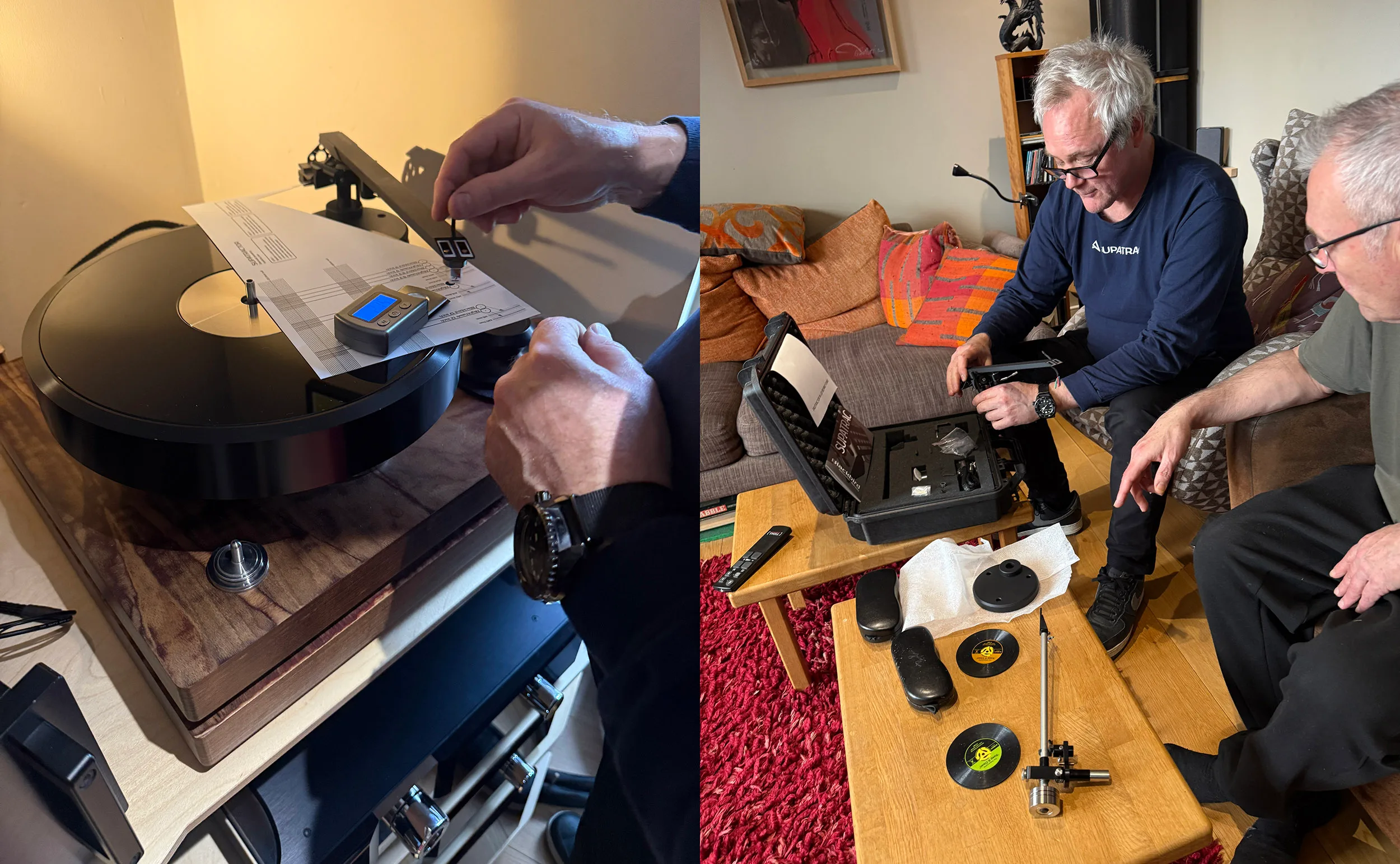
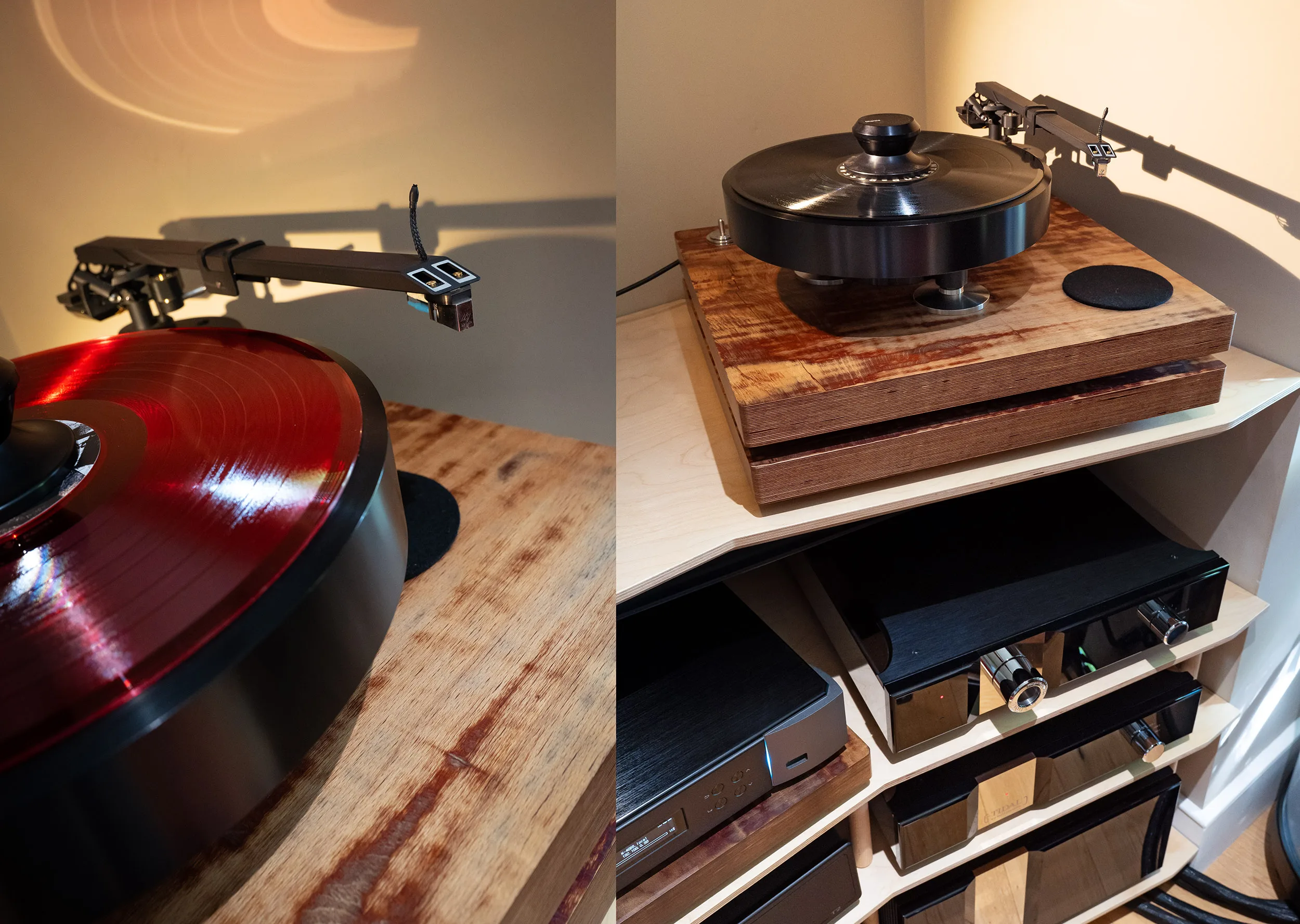
The Blackbird has a very distinctive look and its mode of operation is also very idiosyncratic but if you are onside with all of that, then the performance for the money is really quite something. Alan has found the Blackbird a fantastic upgrade and this tonearm has in a sense, rewritten the rules on Turntables a little. I am in agreement with the designer Richard Braine that the tonearm is actually just as important as the deck and all too often customers weight too much priority on the deck alone. After that, vibration control can be investigated also. We have found that putting a humble deck on a Seismeon platform can radically elevate its ability to that of a much more expensive turntable.
Alan’s next upgrade will probably most likely be the turntable though and he will no doubt migrate the Supatrac over to whatever he goes for. After that, the Intra power amp to replace the now discontinued Impulse will be a large sonic gain, as will exchanging the existing Melco n1 for a TIDAL Arkas streamer. After that, things become less clear and further upgrades will be harder fought, requiring substantial financial input for things like Bugatti MC-1 or Ferios mono amplifiers.
THE LOTUS WAY
As a high-end dealer, this story illustrates a great deal, especially to new potential customers who might be thinking of walking through our doors. Firstly, after we met Alan and helped him progress to a base level, the system became balanced, complete and ‘finished’ quite quickly. He never had to endure a period where the system did not deliver or was underachieving in any way. From then onwards, over the next decade, every change or addition, every version of the system, was immensely enjoyable and more than did the job it was supposed to do. We never made a wrong turn together, and nothing he ever purchased was disappointing or failed to live up to expectations. Part of this is down to all the work we do behind the scenes, putting components together and building systems for research and of course working together with you in a close relationship built upon superb communication. We have a profound knowledge of each component we sell and, crucially, how it can be matched and melded into a complete system.
The second interesting point to note is the relaxed, flexible nature of the relationship and the way things happened over the course of all that time. Alan has borrowed things on many occasions, we have sometimes loaned him pieces of equipment to ‘fill in’, and some things he bought were even traded back at the same price so he didn’t actually lose any money. We try to make the process as stress free and risk free as possible. Alan has always been serious about the hobby and about music – like many of us, it’s a crucial part of his existence – but he does not have a bottomless pit of money, so he has had to progress steadily over the years and also take advantage of pre-loved equipment when available. We could count it all up, but he has probably saved a huge amount over the years compared with having to buy everything at new retail prices.
The third point to mention is that at times Alan’s journey mirrored the journey of Lotus. A really good dealer is also constantly moving on his own trajectory as newer better products are produced, new brands emerge and new discoveries are made. We are always working on our own development behind the scenes and identifying where the new state of the art lies and where the next piece of value awaits in the industry. Sometimes certain pieces of equipment lose their relevance or get superseded by other more inexpensive items. It is our job to constantly ensure that our portfolio keeps step with the cutting edge so that we can continually bring you the best that is currently available. Many components that Alan enjoyed in his system were new to the UK at the time – the Melco, the Rockport Atria II, the Ri-101 upgrade, HifiStay Dharma – we relished discovering them as much as he did and sometimes at the very same time.
Alan’s story ultimately shows us this wonderful hobby of ours. It’s all music, one of the best things in life, and when done right – when you are guided through it in a secure, relaxed and risk-free manner – owning and developing a really good hi-fi system is simply a huge amount of fun. It’s also aspirational and comes with a high degree of pride of ownership. Alan’s current system is a rare treat, giving a level of musical insight and emotional communication that very few other systems will ever get close to delivering. It looks incredible as well: the build, the finish, the engineering of it all. It pleases its owner in much the same way as any other highly desirable purchase, such as a statement watch or a supercar. If he never touched a single component ever again, it wouldn’t matter one jot.
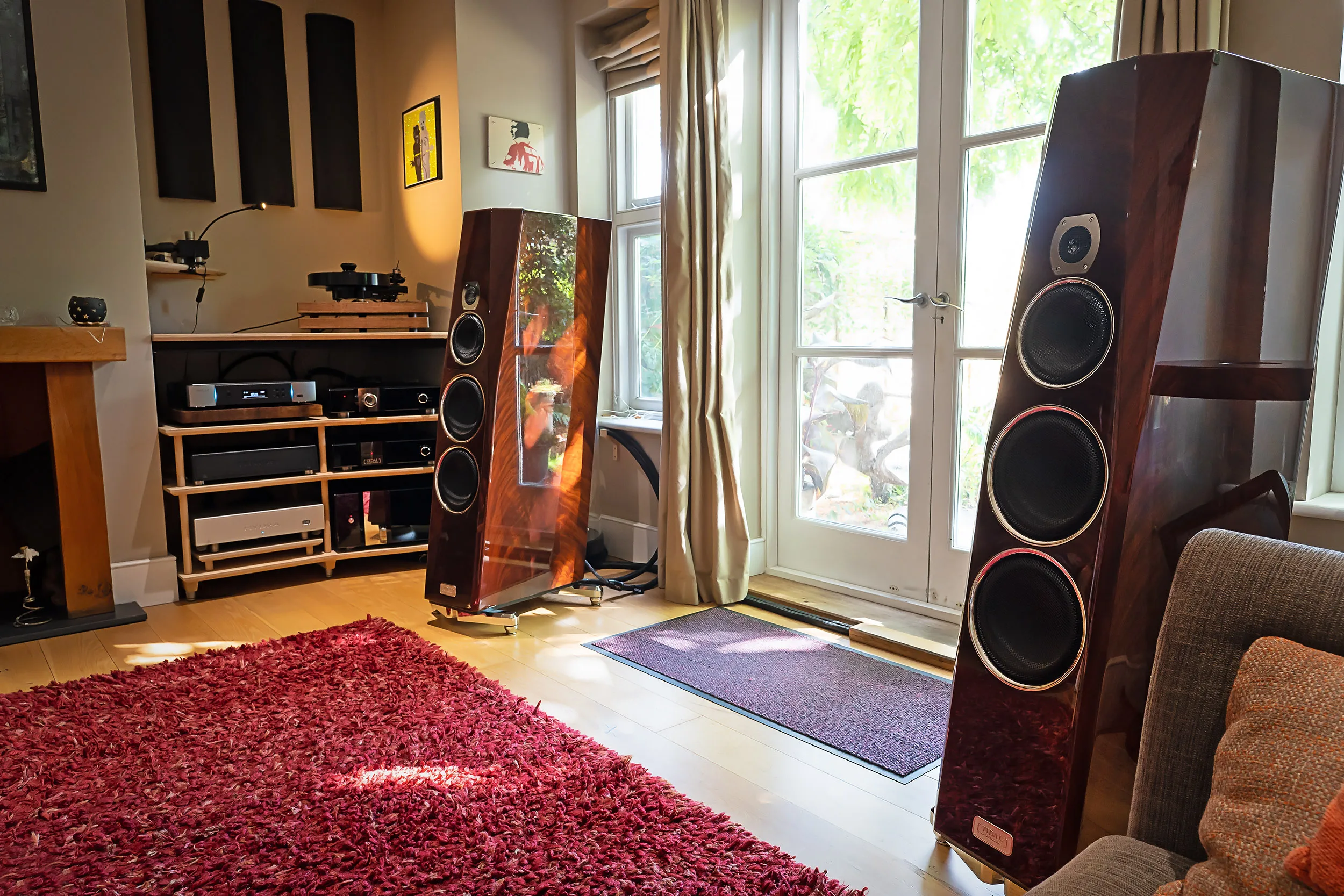
“The biggest ‘bang for buck’ through that period were the Atrias and the Typhon. Huge. However, nothing compares to adding the Contrivas. They changed the whole sound landscape. Simply stunning. Every note has full shape and texture. Decays that seem never to end. Super high resolution. You know all this. Enjoyment dialled up to 11. I still grin every time I listen to them.”
Alan’s relationship and journey with Lotus will remain something of a benchmark, an ideal. Not everyone is quite so dedicated or engaged with the hobby and the continued development of their system, but the positive aspects of this relationship – its helpful, casual yet professional nature, its inherent flexibility and its loyalty – are things we try to underpin all of our customer relationships with. Ultimately, it’s the only fair way to sell high-end audio.

CONNECT WITH US