


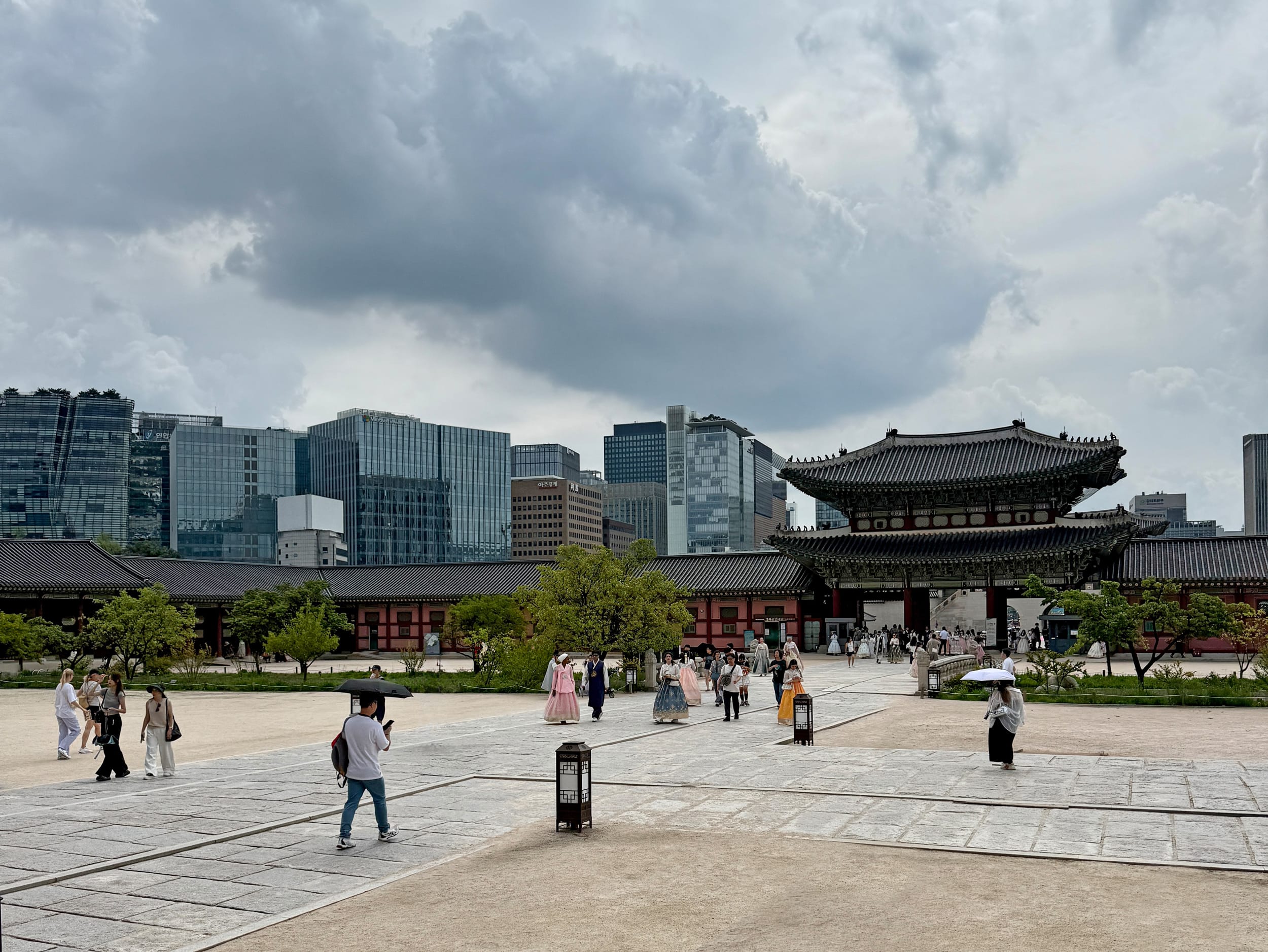
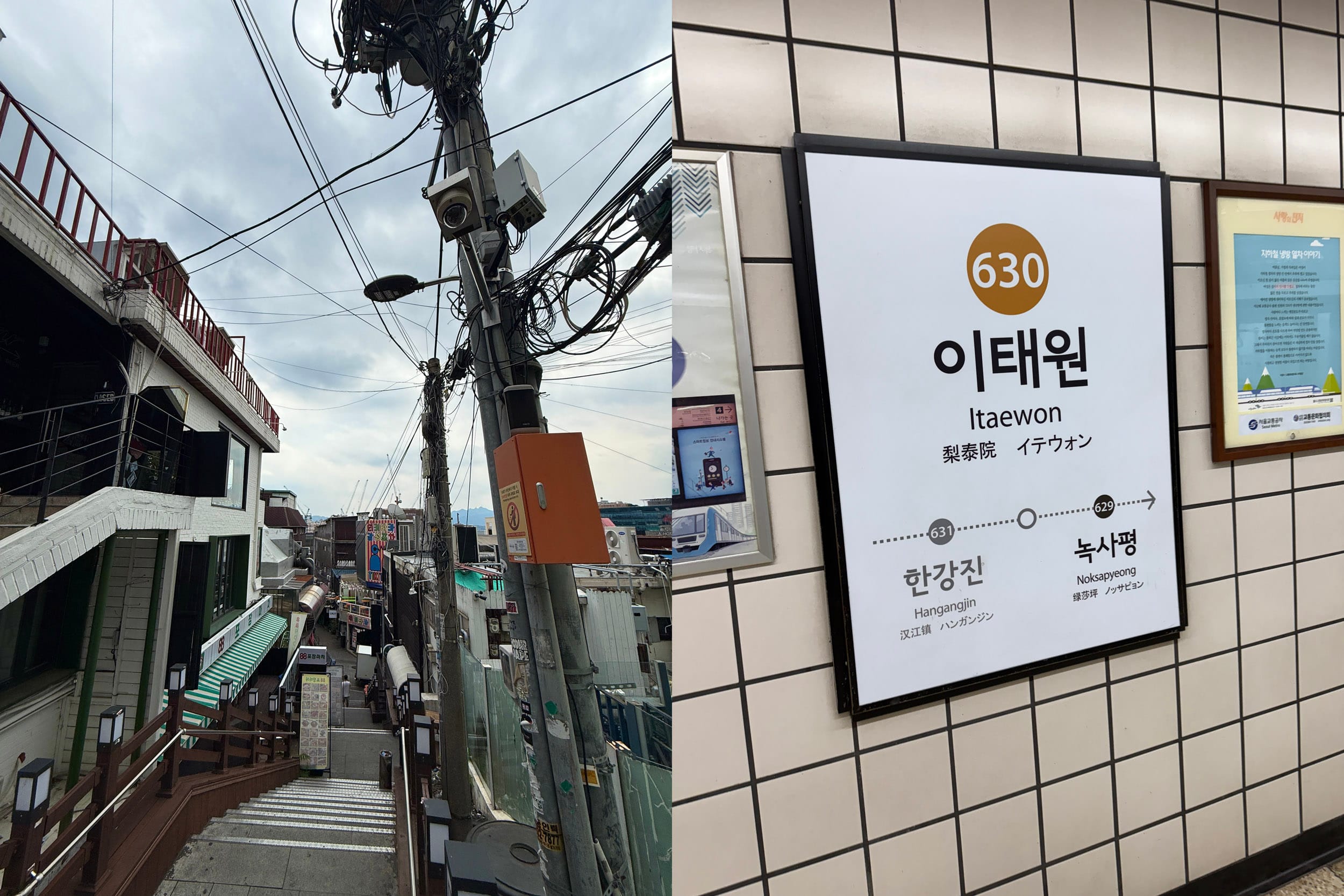
I am sluggishly wandering through the circuitous elevated alleyways of Itaewon, one of Seoul’s more vibrant and international districts, looking for some decent barbeque. Today though everywhere is closed and there’s very few people in sight; it’s a ghost town. The weather app on my my iPhone tells me its 92% humidity and it feels it too. This is the middle of Korea’s summer and many Seoulites have left for the coast or the islands to escape the high heat. Maybe people just avoid stepping outdoors altogether at this time ? This is certainly a whole different feeling to when I visited 6 years ago in November 2019 but thankfully the delicious food is still exactly the same. Eventually I find a cramped, dimly lit den off a steep side street and from a menu of about 6 different choices – 2 of which are unavailable – I settle on cheonggukjang stew and grilled pork belly. Only perhaps in India has the food from somewhere so threadbare and low rent, tasted so amazing.
If you ever happen to look through a year of Lotus invoicing, the name Hemingway might just appear more times than anything else. That doesn’t equate to the greatest revenue of course or even the most product in terms of cost but it does mean that in terms of sheer number sold, Hemingway wires rank at the very top. The reason ? Well, Hemingway cables and interconnects are first and foremost amazing performers and deeply competitive at their retail prices but also, they possess a noise reduction technology which additionally improves the electronics in a system globally. The way we build systems here also means that good cables have the power to elevate a systems performance by an order of magnitude of many and Hemingway, contrary to traditional thinking, will improve and upgrade much cheaper systems as well as the high level builds.
A glance at our second hand preloved page these days will usually reveal an enviable list of desirable cables from many of the most well known and most coveted premier high end brands. Remember that all of these heavily advertised award winners were likely part exchanged for Hemingway, and that would be Hemingway which is lower down the range and far cheaper than the trade-ins were originally. A half, a third or even up to a quarter of the price. In short, customers simply love this brand; the way Hemingway opens up a system and breathes life into it is truly startling.
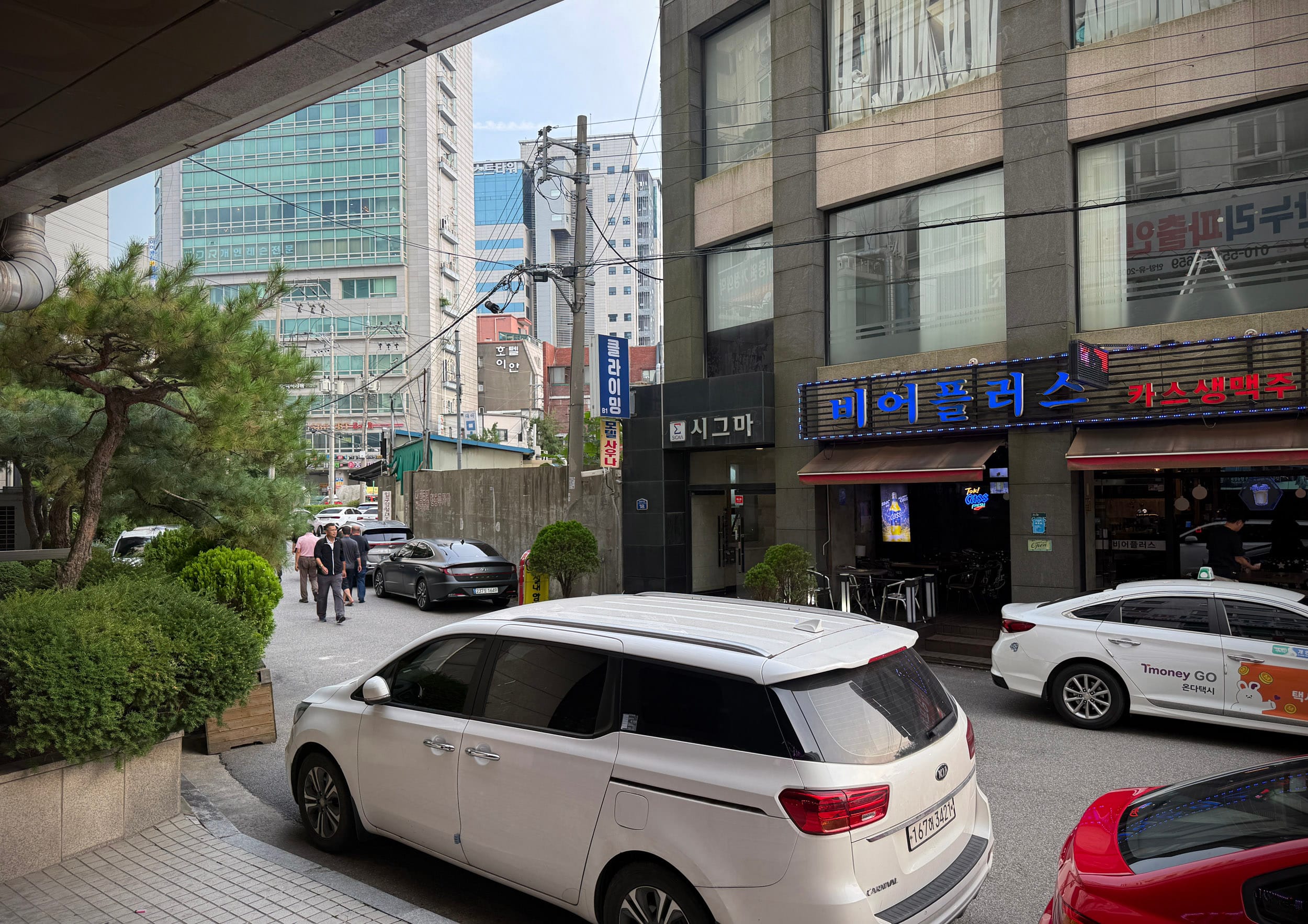
The Hemingway headquarters is located in Anyang, a satellite city of Seoul some 12 miles from the Han river. The building is fairly typical of the Korean development boom of the 1970’s and 80’s, a three rise utilitarian commercial structure with stark beige interiors, enthusiastic use of large sheet glass, hard tiled walls and floors. Up one flight of stairs and outside the set of frosted double entrance doors a large blue plaque tells us that ‘Hemingway cable was built for one reason, to feel a deep emotional satisfaction’. One would be forgiven for suspecting marketing doublespeak here but we must remember that Hemingway’s founder, Doyoung Chung is a music lover and audiophile just like you and me, and owns a number of very special systems in his own home which he enjoys daily. Passion is not something that is too difficult to find around these parts. The plaque continues: “This new revolution is a unique, patented technology developed by puncturing a hole in the insulator to control the magnetic field and the counter electric current.” Remember that, we will return to it soon.

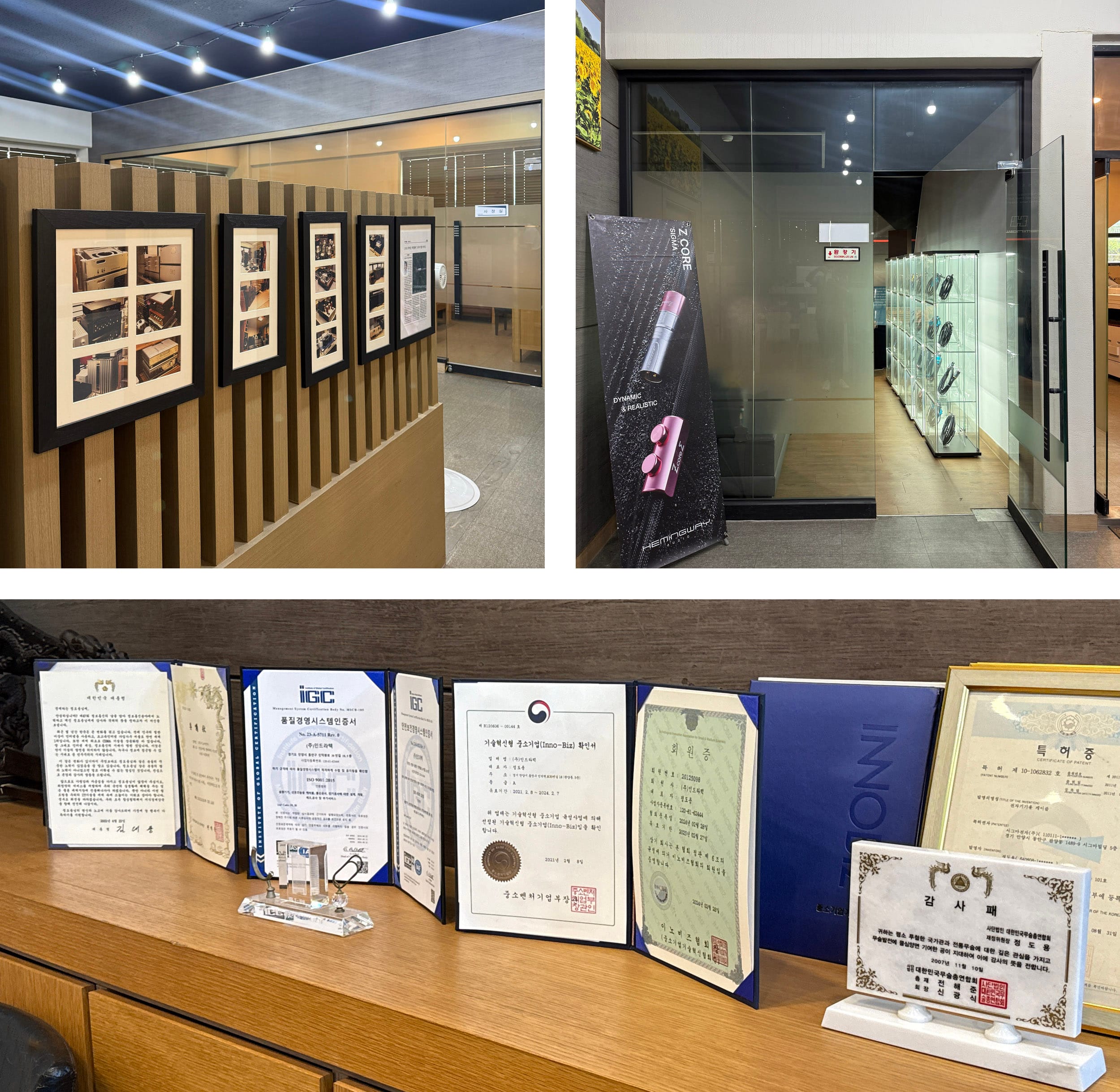
Walking into the reception and office area it is a functional space with 2 open plan desk areas and a further 2 enclosed private offices, one of which is the home of Doyoung Chung himself. Various awards and certificates adorn this quiet space, most notable of which is a letter from the former president of South Korea, Kim Dae-jung, expressing gratitude and encouragement to Doyoung for all of his hard work in the field of information and communictaions. This recognition of course relates to Doyoungs endeavours in the company Indratec in which he is both lead engineer and founder.
Indratec, incorporated in 1993 by Doyoung, design and manufacture signal transmission and distribution equipment for audio, video, and data signals used by various industries such as cable television providers and traffic data centres. For example, some of Indratec’s products are employed by the Korean Government to manage city traffic and collect highway toll payments. Much of Indratec’s equipment has to inherently combat radio and electromagnetic interference so the company have historically invested an enormous amount of R&D into controlling and reducing effects from these electrical fields. Hemingway then is a typical example of a smaller newer outfit which has inherited a large amount of costly technology and know-how from a larger affiliated company. Leveraging over 15 years of dedicated research into magnetic field control is really the primary reason why the Hemingway product is so transformational when you the customer, connects it up for the very first time in your Hifi system.
Beyond this functional reception area lies some 30 employees across both Indratec and its subsidiary Hemingway. They adopt a flexible model of resource organisation, where personnel are allocated dynamically based on project needs and operational priorities. One is reminded here of Toyota’s ingenious production system which optimizes waste, encourages employee feedback at all levels and reduces fixed costs such as labour. The Korean way is as always to take good care of all the little details.
After a look round the Doyoung’s personal area, we retire to a client room to talk in depth about the company, the current status quo and plans for the near future. A floodlit cabinet of alluring product straddles the short wall from the door. Across in one corner, a prototype mains distribution block invites one’s curiosity and some attractive literature on a far side desk introduces us to the fundamentals of FMCF technology. Nicole, eldest daughter of Doyoung is Hemingway’s CEO and the person through which the Lotus relationship began and has flourished. She serves us delicious tangerine tea from Jeju island and chewy Yakgwa cookies. The edible treats never really stop here in the land of the morning calm.

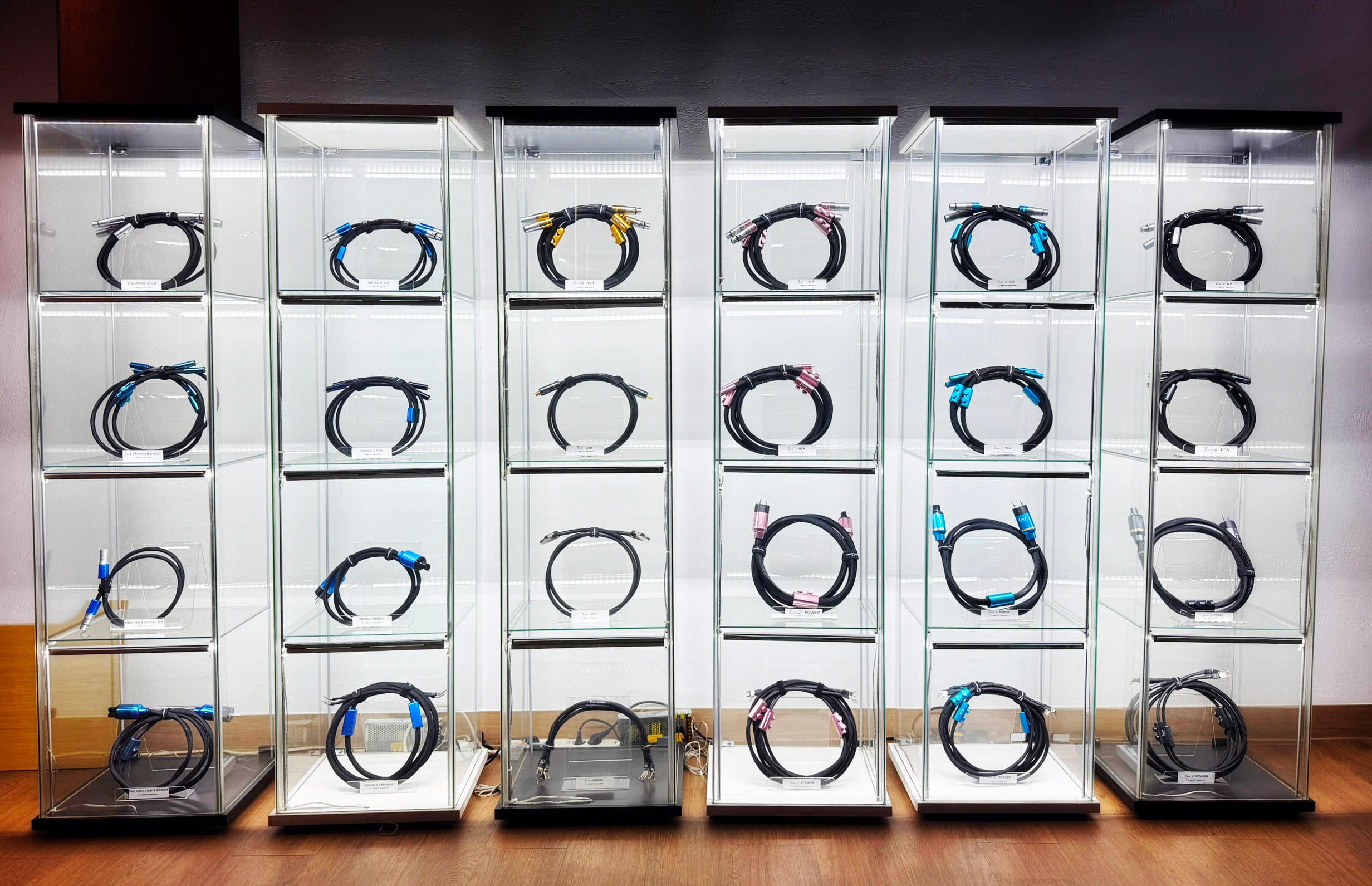
It is clear that Hemingway is currently undergoing a period of investment and expansion. As they continue to develop their relationships with partners worldwide, they are also exploring arenas beyond high end audio for their products – concert halls, sound wiring in commercial buildings and the car audio infrastructure for large manufacturers like Hyundai. For us Hifi buffs though, we can also look forward to a number of things which will develop from this period of expansion. Soon in 2026 we can enjoy a new entry range from Hemingway. “Integra” is expected to come in at a lower price than the highly successful Indigo II and Nicole tells me the performance will not disappoint; they are very proud of this new line. This then follows the trend we are seeing with many of our brands, prices are coming down not going up, and performance is of course better than before.
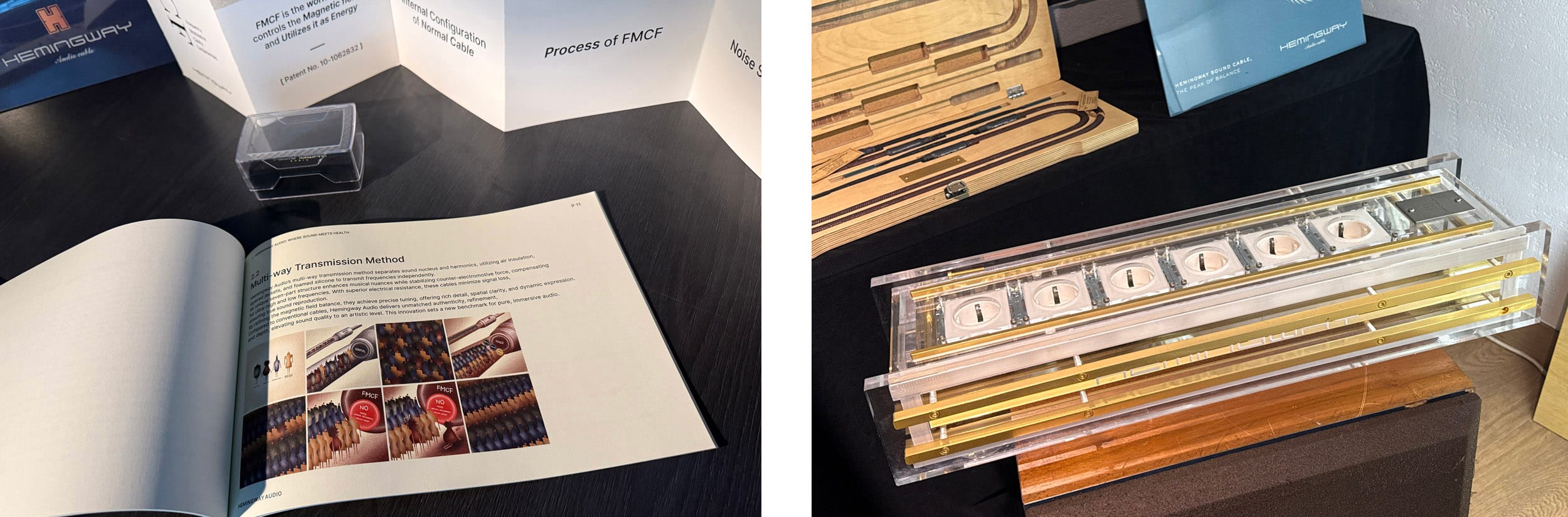
The early development mains block on display sparks a separate conversation and although we can’t say too much, we hope that we can also soon show you some Hemingway products in this category, that would be a very useful addition to the range. Nicole assures me that they are working hard on their proprietary UK 3 pin mains plug so Hemingway mains cables for Blightly will be happening relatively soon. We know from the company and from other partners such as Ana Mighty Sound in Paris, that the power cords are also very special indeed so we look forward to sharing them with you in the near future.
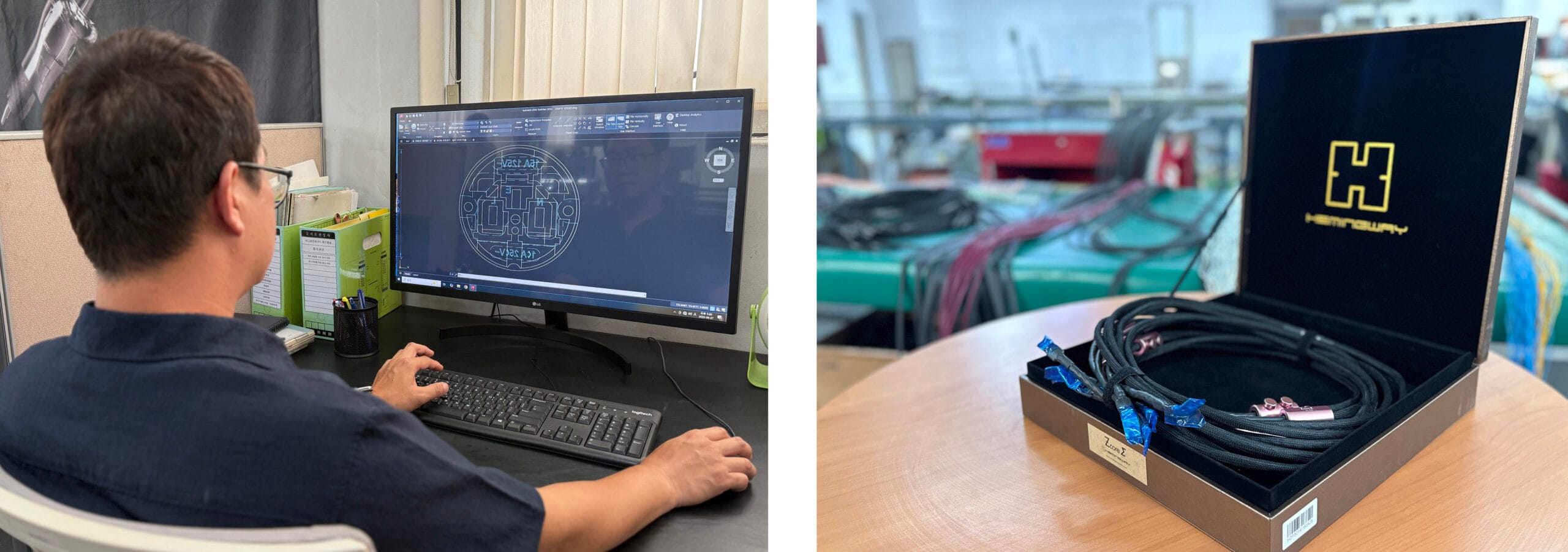
The Yakgwa are all demolished, the delectably fragrant Osulloc Tea all but vanished. We don’t need more time and more refreshments though because thankfully, Hemingway are not a company who make endless new products to prod the marketplace and extract money from people. The things they produce do not need fiddling with or upgrading on a regular basis and everything they make is competitive and value orientated to such a degree that it will remain relevant and compelling for many years down the line. With future product plans fully discussed then, we head to the deeper floors of the building to explore manufacturing.
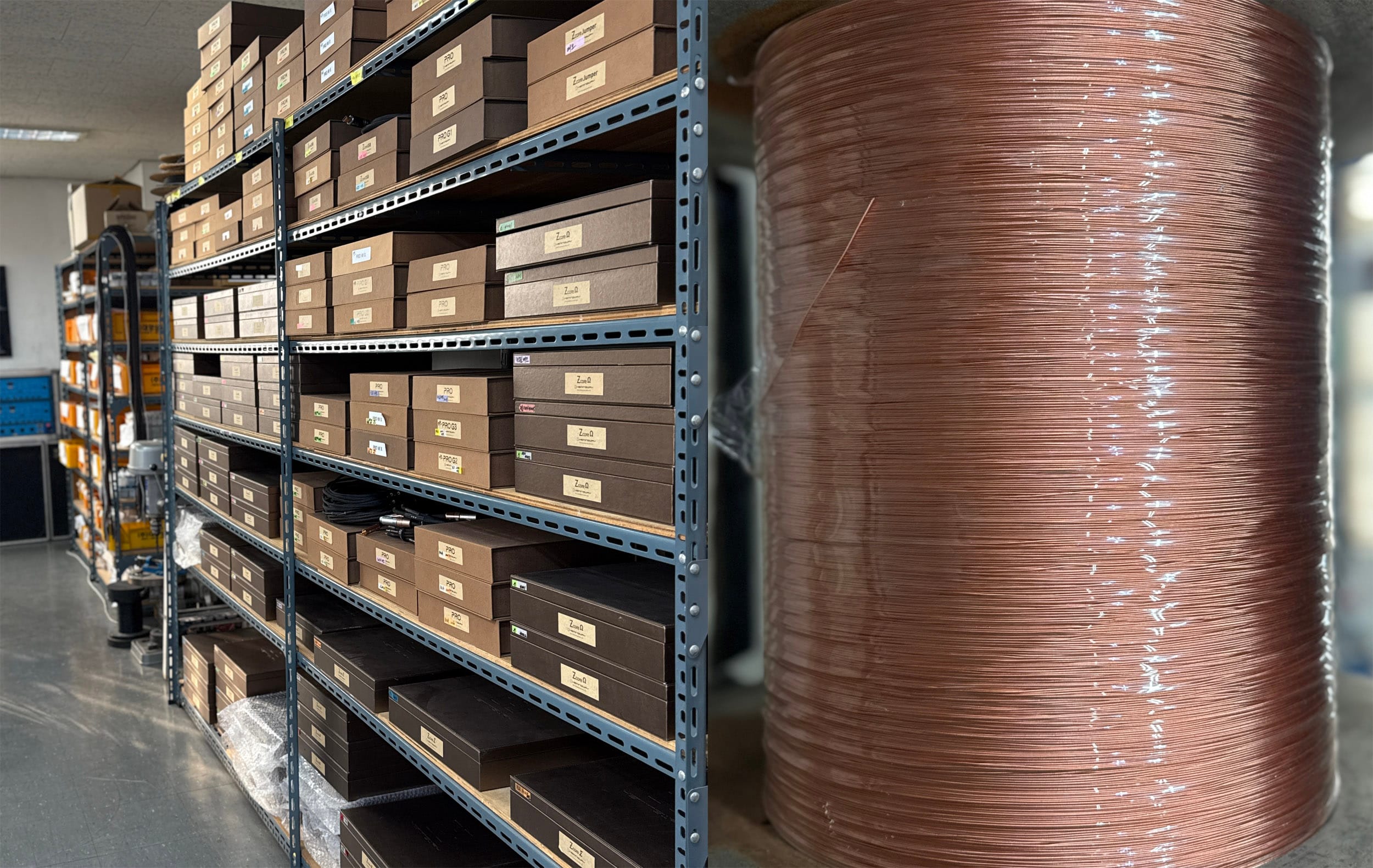
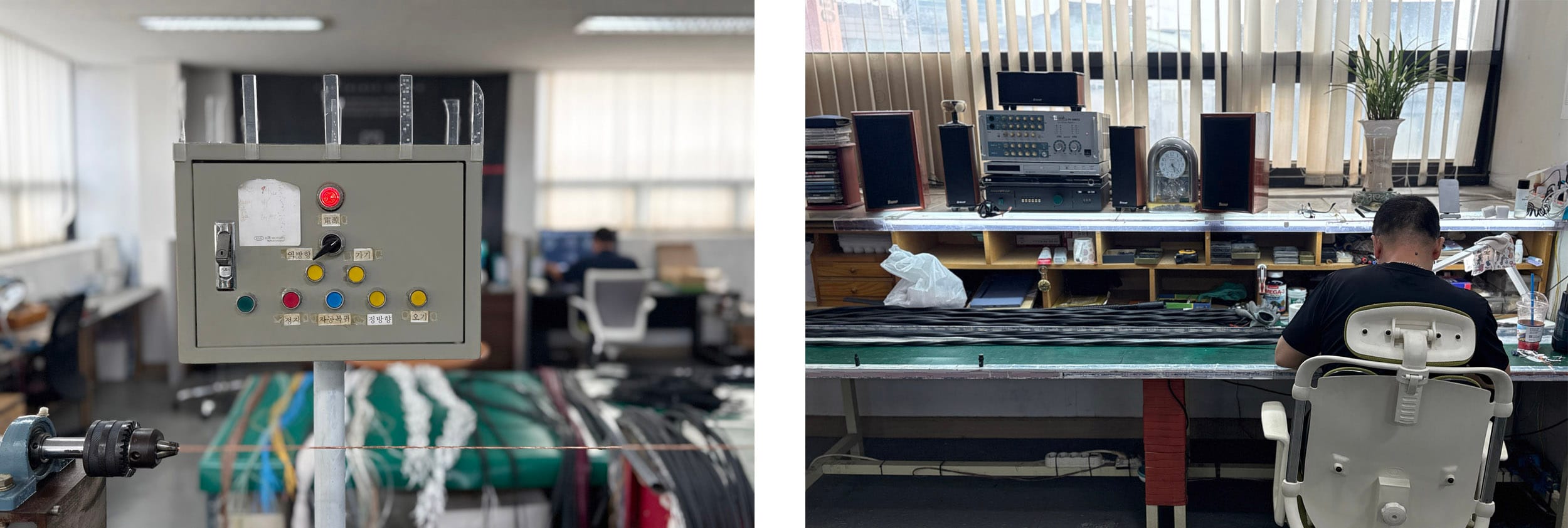
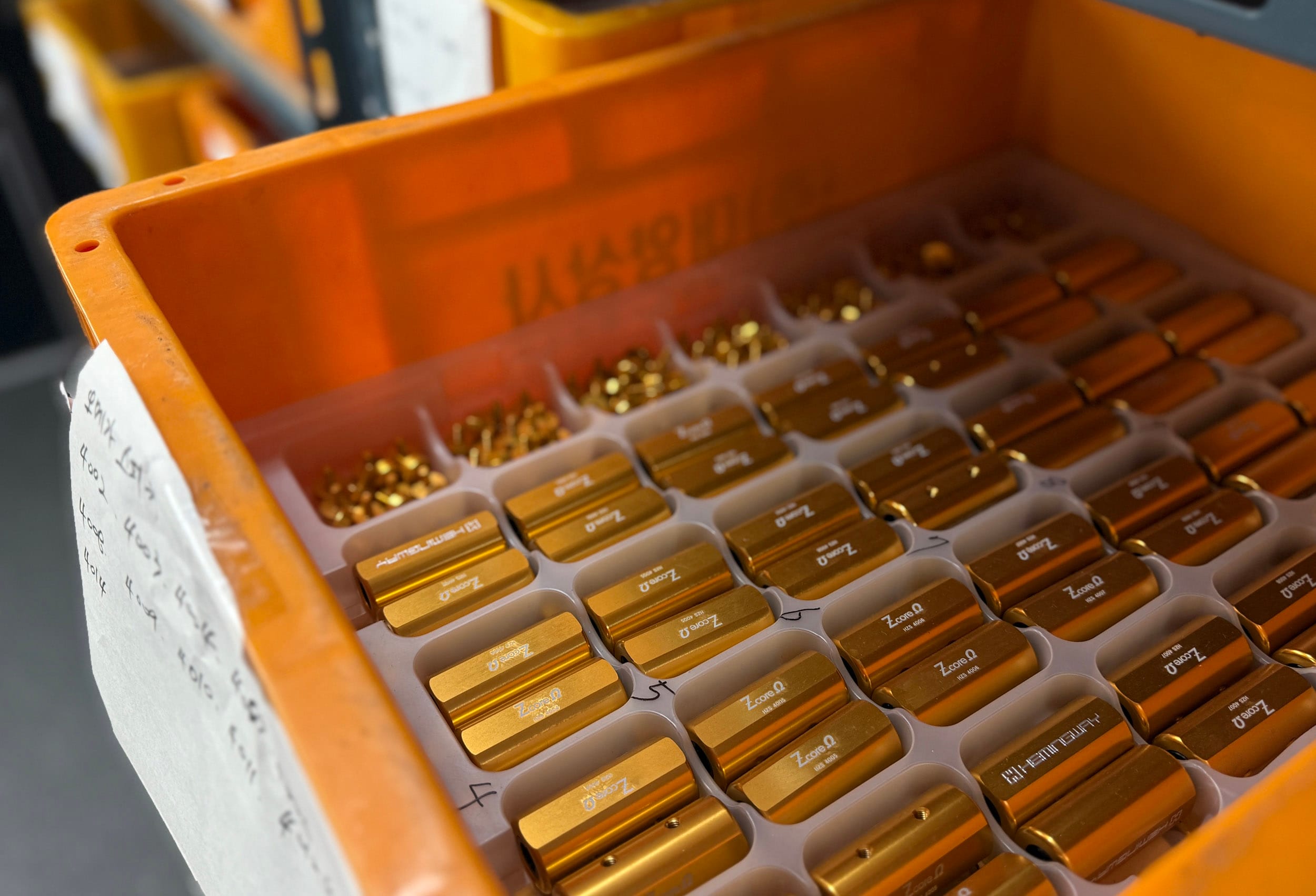
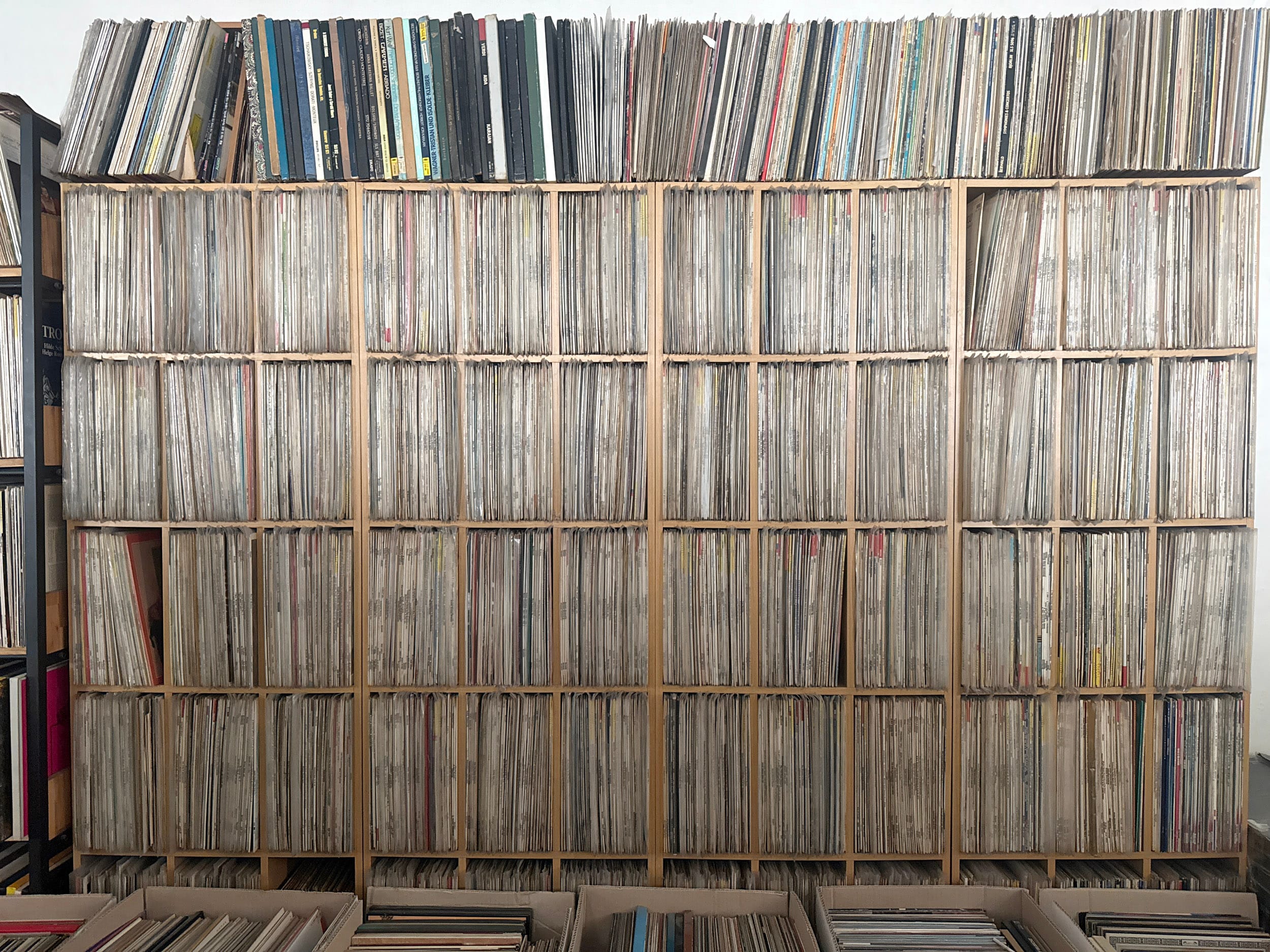
There is obviously a limit to what we can show you but the manufacturing areas illustrate to me just how bespoke the products here are and how much care is employed at each juncture. I engage with many of the workers I come across and it strikes me that this is a jovial and warm organization; people seem happy and relaxed and committed in the style of a smaller family business. Despite the language barrier, many are keen to show me their input on the production line and enrich my visit as much as possible. In one room there lies an awful lot of products and an vast array of parts. I begin to understand why we always receive Hemingway orders within just 1 week of placing them. I wish more suppliers were as efficient at holding stock and then shipping it rapidly across the globe. In another area lies a vast bare room flanked all around by windows. This will be the new showroom in 2026. Across the hallway, a large storage area which additionally houses an enviable collection of Vinyl.
What is it then makes Hemingway cables so special ? What exactly did Indratec gift to Hemingway in the way of technology which means that when you the customer installs a set of their speaker cables, the entire system seems to benefit from a significant noise drop and overall cleanup and you sit there fairly open mouthed ? Hemingway cables have a noise controlling effect which emanates out into the entire system. Yes, even into the electronics themselves. You can think of it a little like the grounding we see from companies like Entreq, Shunyata and CAD, where pollutants that can contaminate the signal are given a pathway to drain into or controlled in some favourable way.
Now this of course is a big bold claim and in a world where many people love to argue that even a regular cable makes no difference in a hifi system you would be forgiven for being a little but sceptical. But then this technology inside every piece of Hemingway is as easy to demonstrate as it is to doubt or deride. Simply insert one of their products for a while, then replace with a lesser product, and for the first few minutes that lesser cable will be flattered and the system will still sound pretty good but as the seconds tick by and Hemingway can no longer exert influence, the sound will get worse and worse and pretty soon you’ll be back to the true mediocre performance of the basic cable you reintroduced.
There are other ways of demonstrating what’s going on too; like how a higher up set of Z-core speaker cables inserted into a very basic system that costs not even half the price of the cables, will transform the electronics themselves rather than do that customary thing of being too revealing and showing up the limitations of a poor system. Hemingway will clean the most rudimentary and budget of systems (hence the work with Hyundai car audio), it can take a medium level system and make it sound reference level and it can work its magic on the every best and lowest noise systems, bringing about even greater transparency and realism.
This main technology then, the genesis of which began with Indratec, is know as Hemingway’s Z winding technology and its one of the reasons I came to Korea, to discuss, investigate and try and demystify its ingenuity. Z winding is in short, a proprietary cable architecture that manipulates electromagnetic behaviour through precise structural modifications of the cable. Unlike conventional shielding methods that rely solely on materials to block interference, Z winding focuses on the geometry and manual construction of the cable to actively shape how magnetic fields behave within the transmission path.

Before we continue, its important to understand that magnetic interference is the arch enemy of good sound quality. It adds unwanted electrical activity to the audio signal as it travels through a system which raises the noise floor, masks fine detail, and makes the sound less clear and focused. It can also modulate the signal, blur transients, and disrupt timing and phase information, which weakens imaging and soundstage and introduces grain and haze. Opposing currents created by magnetic fields further interfere with signal flow, reducing dynamics and tonal purity. When magnetic interference is reduced, the system sounds quieter, calmer, clearer, more stable, and more natural, with better detail and separation.
How does Hemingways Z winding actually control these magnetic properties ? Well there are a few different methods going on here and we are not at liberty to reveal everything of course but the use of RF modulation zones is certainly crucial. Specific sections of the cable are manually twisted or altered to either suppress or induce RF modulation. These structural changes directly affect the magnetic field distribution along the cable. Another route of attack is through the suppression of counter current. When current flows through a conductor, it naturally induces a counter current that opposes the original flow. Hemingway Z winding disrupts this phenomenon by altering the AC signal path and repositioning the ground signal, effectively minimizing or eliminating counter current formation. Every Hemingway is hand-taped and wound, allowing for micro-level adjustments that machines cannot replicate. This kind of precision enables fine-tuning of magnetic behaviour for each model.
The results of all of this of course is the preservation of signal integrity and the reduction of background noise leading to a cleaner signal path with less distortion, free from smear or overlap. With a lower noise floor, not just the microdetail but the harmonics of the music is developed extensively. With a clean path unperturbed by electromagnetic interference, the music times in a completely different way, interlocking and flowing in a natural unforced manner which is rare to hear in any cable. Anyone who has demonstrated Hemingway with me will recognise these properties immediately. You can’t miss them from the very first encounter.
So why does all this technology then go on to affect and upgrade other parts of the system like the amplifier or the digital front end ? Well the answer is fairly rudimentary and understood from the premise that every component in a system contributes its own electromagnetic behaviour into the total end result and when interference isn’t controlled, its effects stack up. Once installed, the magnetic behaviour of Hemingway influences the connected components by stabilizing the entire electromagnetic environment system-wide. This can lead to improvements in soundstage, imaging, timing, and tonal balance across the whole system. Hemingway also like to talk about Persistent Field Effects. They state that a cable’s structural modulation creates a magnetic signature that seems to “settle into” the system, enhancing coherence and reducing transient noise even beyond the cable itself.
As a High End dealer I don’t count myself as the most technically mind person. I am more right brain, more emotionally led. For me its all about the music although I understand that without original and ground breaking technology you have only average product that does not advance the hobby. When you demonstrate or borrow Hemingway cables though, you can validate this stuff for yourself. All the things they talk about in the blurb, you can hear. Yes I know that other cables reduce the noise floor but simply not in the way that Hemingway does and its immediately apparent when you hear for yourself. You certainly don’t need golden ears or need to own a reference system more expensive that a Supercar.
Hemingway is a very important brand for us and extremely powerful and compelling product. It is true to say that it is not necessarily the correct match for all the systems we create and every customer’s set of ears is different but we do employ it a lot in our customer builds and our demonstrations. It is also fair to say that Hemingway has elevated the total performance score of Lotus as a whole. Many of our systems and our customer demonstrations are that much more powerful thank before because of Hemingway wires. Our portfolio is comprised of mostly unique and exclusive product but some product we sell can be experienced at other dealers too but Hemingway often means that it will sound significantly superior here at Lotus. When new customers inquire with us about a box change, an amp upgrade or maybe a switch to a better DAC, a few weeks down the line they may well have simply bought Hemingway with us instead and achieved a better result than if they spent quite a lot more and got the better box.

It’s time to celebrate what’s been a highly productive and fascinating visit to our partners in Korea. That of course means more food ! Bongwoori Yeoksam in Gangnam is well known as a restaurant for parents of a marrying couples to be newly introduced but for us, it’s a chance to enjoy an elaborate multi course dinner and reflect on matters beyond home Audio and cable technology. It’s been a great visit and I still don’t have time to tick all the tourist boxes on my list. Until next time then … just never again in the Summer !


CONNECT WITH US